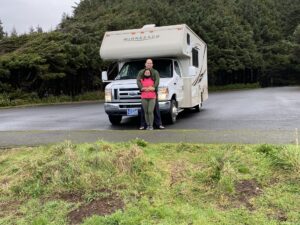
Sequoia National Park is one of the best places in the country to show kids something that is truly huge. The General Sherman Tree is the largest tree in the world by volume, and the walk to it is short and paved. The catch, if you travel like we do, is the road. The Generals Highway climbs from the hot foothills to the Giant Forest on tight curves, and the park advises against vehicles over 22 feet on the steepest part. Plan around that, and the rest is easy.
We came through Three Rivers and Sequoia in May 2022 with the kids, as the first stop of our California big loop out of Upland. That loop, which we have driven several times in pieces, is in our California Sierra road trip with kids report. This post is the practical version for families: what to see, how the RV rules work, where dogs can go, and how to handle the heat. Details were checked with the National Park Service as of 2026.
Getting there and the RV length advisory
From Southern California, the usual approach is Highway 198 through Visalia and Three Rivers to the Ash Mountain entrance and the Foothills Visitor Center. From there the Generals Highway climbs toward the Giant Forest. This is the part to understand before you go.
The NPS vehicle length page breaks it down like this, as of 2026:
- Foothills Visitor Center to Potwisha Campground: vehicles over 24 feet are not advised.
- Potwisha Campground to Giant Forest Museum: vehicles over 22 feet are not advised, and single vehicles over 40 feet are prohibited.
- Crystal Cave Road: vehicles over 22 feet are prohibited.
- Moro Rock and Crescent Meadow Road: single vehicles over 22 feet and anything towing are prohibited.
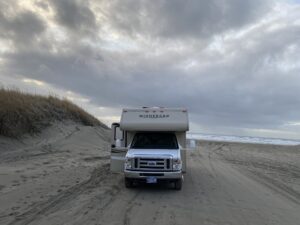
Our Winnebago is 23 to 24 feet long. That keeps it inside the 24-foot advisory up to Potwisha, but puts it over the 22-foot advisory from Potwisha to the Giant Forest, and over the limits on Crystal Cave Road and the Moro Rock and Crescent Meadow road.
For longer rigs, the park says Highway 180 through the Big Stump entrance on the Kings Canyon side is the preferred route. Measure your rig, bumper to bumper, before you commit. Do not guess. NPS describes this road as narrow and winding, and the advisory exists for a reason.
If you do drive up, the oversized vehicle page lists where RVs can park: the main General Sherman Tree parking area, the RV spaces in the upper lot across the highway from Giant Forest Museum, the lot in front of the Lodgepole Visitor Center and market, and the RV spaces across the road at the Foothills Visitor Center. Wolverton is the only Giant Forest picnic area that takes longer RVs.
Three Rivers as a base
Three Rivers is a small foothill town at about 843 feet, near where the North, Middle and South Forks of the Kaweah River meet. It sits just outside the park’s southern entrance, and it is the last place for gas. The park has no gas or EV charging inside, and NPS says the nearest gas is in Three Rivers, about five miles from the entrance.
That makes it a sensible base. You can stage the night before, top off the tank, and drive up early. Early matters. The NPS says the lots at Giant Forest Museum and General Sherman usually fill by mid-morning in busy season.
If you like to sleep on public land, the park points out that Sequoia National Forest and Giant Sequoia National Monument surround the parks, and the rules there are different from the national park (dogs, for one, are allowed on national forest trails on a leash). Check the Forest Service for current camping rules before you count on a spot.
The General Sherman Tree with kids
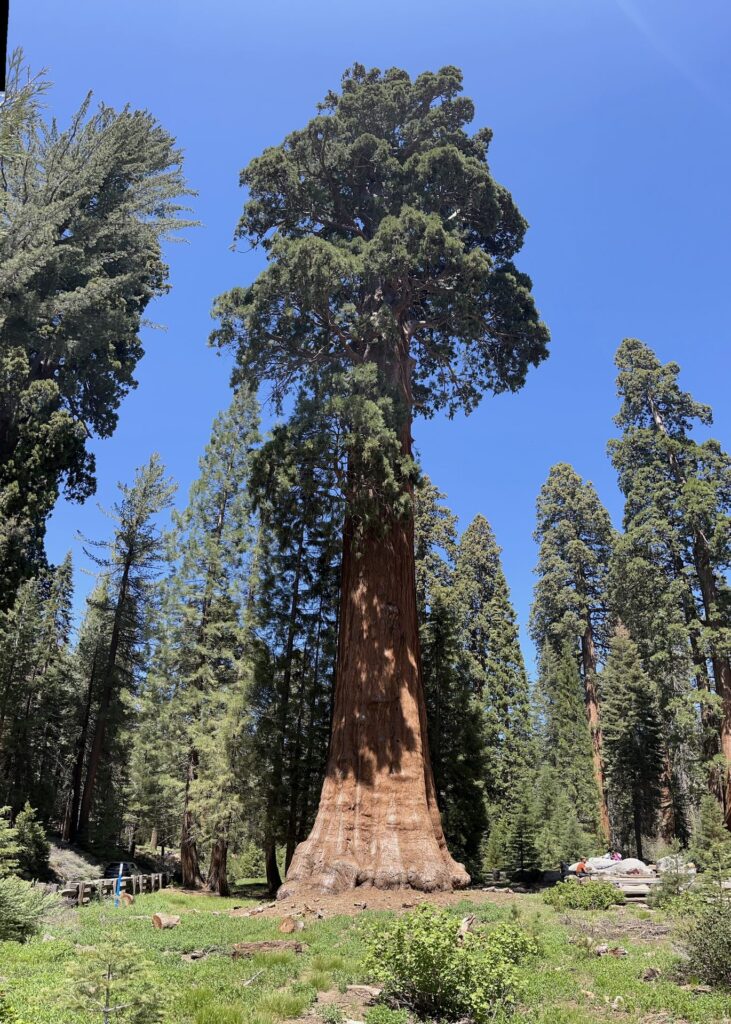
The General Sherman Tree is about 275 feet tall, with a ground circumference of about 103 feet and a volume of roughly 52,500 cubic feet. NPS calls it the largest tree by volume in the world. Kids may not care about cubic feet, but standing at its base gets the point across.
There are two ways in:
- The main trail starts at the parking area off Wolverton Road, between the Sherman Tree and Lodgepole. It is paved, half a mile, and goes downhill with a few stairs. That means the walk back is uphill at about 7,000 feet. Small kids who ran down may need carrying back up, so pace it.
- Visitors with a disability placard can park in a small lot on the Generals Highway with a short, wheelchair-accessible trail to the tree. During shuttle season, anyone can ride the shuttle to that accessible trail.
If the kids still have energy, the paved Congress Trail loops through more big trees from near the Sherman Tree. Construction in 2026 closed a section of it, so check the NPS page for the current route.
The Giant Forest and short walks
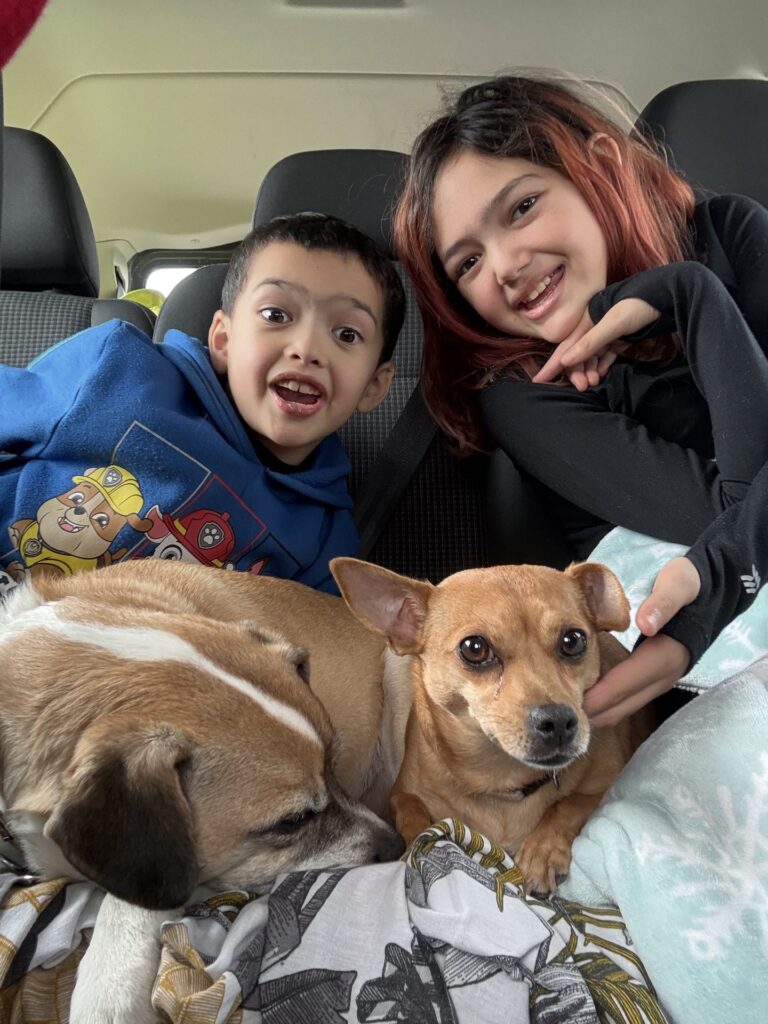
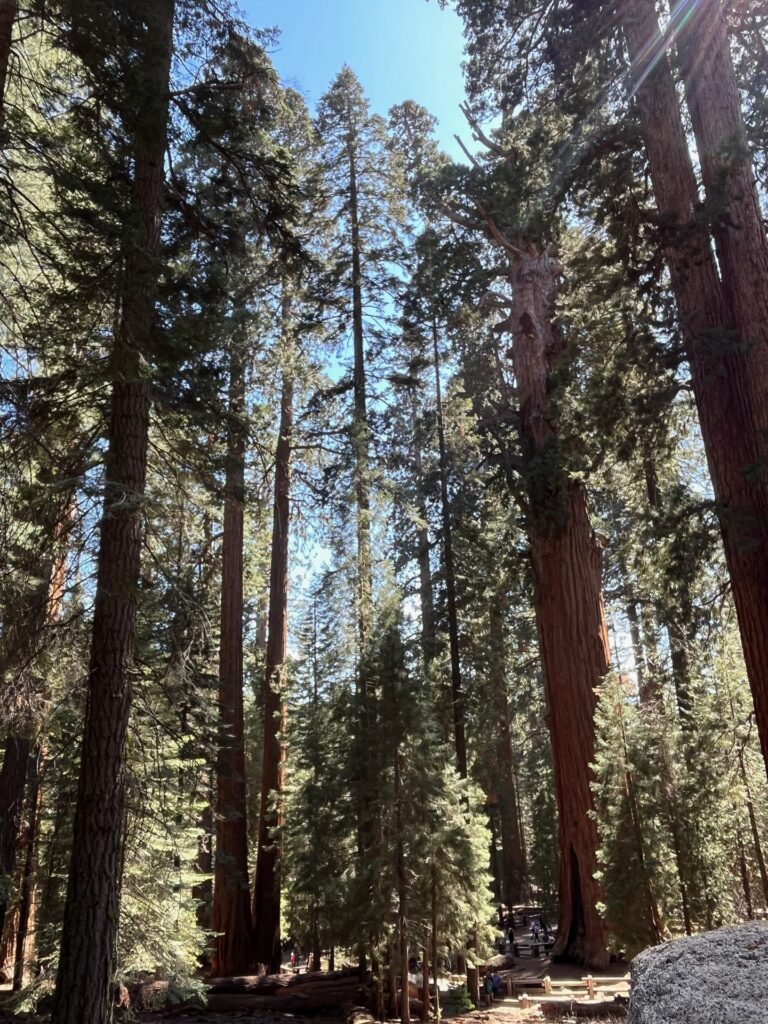
We walked among the big trees in the Giant Forest area with the kids. The dogs stayed in the motorhome, because dogs are not allowed on any trail in the park (more on that below).
If you only do one more walk, the Big Trees Trail is the easy pick. The NPS day hike page lists it at about three-quarters of a mile, paved and accessible, circling Round Meadow. Allow an hour with kids.

Moro Rock and Crescent Meadow
These two are the classic Giant Forest add-ons. Here is what the park says about each.
Moro Rock is a granite dome with a stairway that climbs about 300 feet to the top. It is stairs the whole way up. NPS says not to climb if there is ice or snow on the stairs. With small children, it is a real “hold hands the whole time” walk.
Crescent Meadow has a loop of about 1.8 miles around the meadow, according to the NPS Crescent Meadow page. You can extend it to Tharp’s Log, a cabin built into a hollow fallen sequoia in 1858, which is the kind of thing kids remember. The road to both is closed to private vehicles on weekends and holidays, when the shuttle is the only way in, and its lot is small on weekdays. Remember the 22-foot limit on that road too.
The park shuttle
The in-park shuttles are free and run in the Giant Forest and Lodgepole areas only. As of the NPS shuttle page, summer 2026 service ran May 22 through September 7 and has ended for the year. The park lists tentative holiday shuttle dates for the 2026 to 2027 winter, from 10 a.m. to 4:30 p.m.
In summer the routes cover what families want: Giant Forest Museum to General Sherman and Lodgepole, Giant Forest Museum to Moro Rock and Crescent Meadow, and General Sherman to Wolverton. For RV families this is the best tool the park has. Park at Giant Forest Museum or Lodgepole and let the shuttle deal with the small lots.
There is also a separate Visalia to Sequoia shuttle that stops in Three Rivers and runs to Giant Forest Museum. It needs a reservation and charges a fee.
Tunnel Rock and the boulders of the foothills
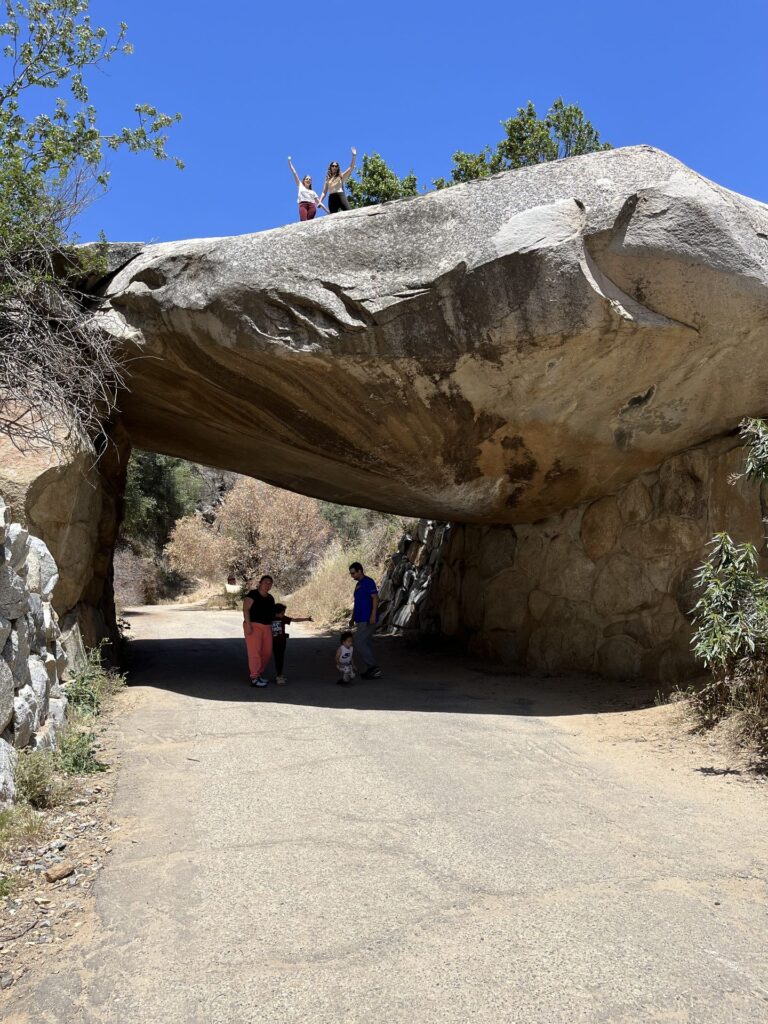
Low on the Generals Highway, in the foothills, you pass Tunnel Rock. According to NPS, it is a granite boulder that once formed a tunnel over the Generals Highway before the road was rerouted. Cars no longer go under it, but accessible parking and a short paved path lead to the old roadway beneath it, and you can stand underneath. There is poison oak around, so keep kids on the path.
The foothills are full of big granite boulders. We walked a trail that passes under a huge boulder and another where a boulder forms an arch over the path.

If you want a picnic stop in the same zone, NPS lists Hospital Rock Picnic Area in the foothills, with shade, grills, flush toilets and outdoor exhibits on Native American history.
Dogs in Sequoia National Park
Sequoia is strict about dogs. Per the NPS pets page, as of 2026:
- Pets are prohibited on all trails, including paved ones like the General Sherman Tree Trail and Big Trees Trail. Pet strollers and backpacks are not allowed on trails either.
- Pets are allowed only in parking lots, on paved roads, in campgrounds and in picnic areas.
- They must be on a leash no longer than six feet and cannot be left unattended or tied up.
- Do not leave pets in a hot car.
Service dogs can go wherever their handler goes. On national forest land around the park, leashed dogs are allowed on trails, which can be a good outlet for a dog that has spent the day in the RV. Our what to pack when traveling with a dog list covers the basics we bring.
Heat in the foothills
This is the part people underestimate. The foothills sit around 1,700 feet and they get hot. The NPS weather page lists average foothill highs of 89°F in June, 97°F in July and 96°F in August, with extremes above 110°F. The Giant Forest, at roughly 5,000 to 7,000 feet, averages highs in the high 60s to mid 70s in summer. The two can be 20 to 30 degrees apart on the same day.
A few practical points for families:
- Do your foothill walks early, then climb to the big trees for the warm part of the day.
- NPS says foothill trails have little shade, rattlesnakes are common, ticks are out from early spring to late summer, and poison oak is everywhere.
- The Kaweah River is cold and fast. NPS notes drownings happen most often in spring and early summer and advises against entering the water in spring. With kids, stay well back from the bank.
- Snow can linger in the Giant Forest into May, so check road and trail conditions if you visit early in the season.
Exeter murals and an old diner
After Sequoia, on the way back down into the San Joaquin Valley, we stopped in Exeter. The small downtown has more than 30 large murals on its buildings showing the town’s history, and you can walk them on your own. The kids posed in front of a train mural, and we stepped into an old-style diner.

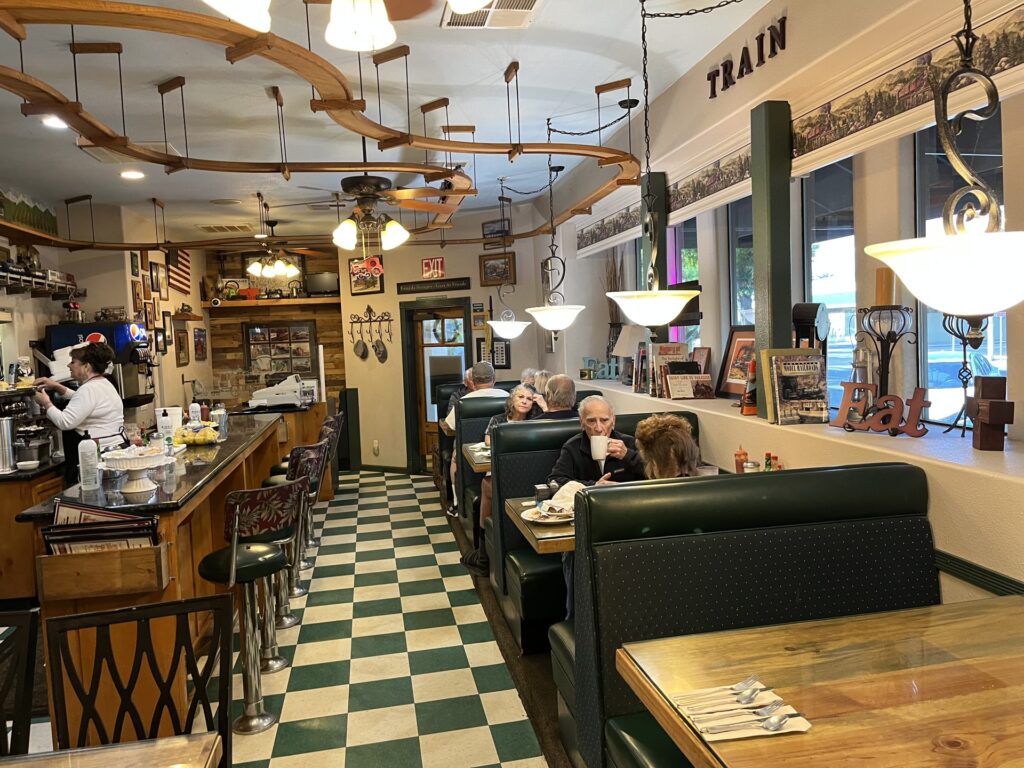
It is an easy leg-stretch after the drive down from the mountains.
Fees, passes and planning
Sequoia charges an entrance fee, and if you plan to see more than one park on a loop like ours, an annual pass usually makes sense. Our national park pass guide explains the options. For walks with small kids, our tips on preparing kids for long hikes apply here too, even on short paved trails at altitude.
Where the loop goes next
From Sequoia, our big loop heads over to US 395 and north up the Eastern Sierra past Mount Whitney, Lone Pine and Bishop. That stretch is in our US 395 Eastern Sierra with kids post. Later on the loop we reach Yosemite, covered in Yosemite Valley for families.
For the full route from Upland through the Sierra and back down the coast, read our California Sierra road trip with kids.