Can you camp in an RV with kids and dogs without paying for campgrounds? Yes, and it is how we travel. Most nights we park on public land, either BLM or national forest, or in a lot or pull-off where overnight parking is allowed. The rules are simple once you know them. On BLM land you can generally stay 14 days in any 28-day period, and you camp at least 200 feet from water. In national forests the forest sets the limit, and the Motor Vehicle Use Map tells you where you can drive. In lots, you ask permission every time. And your dogs never sit in a hot or cold RV for long.
This guide explains how we do it, with the official rules behind each step.
How we travel
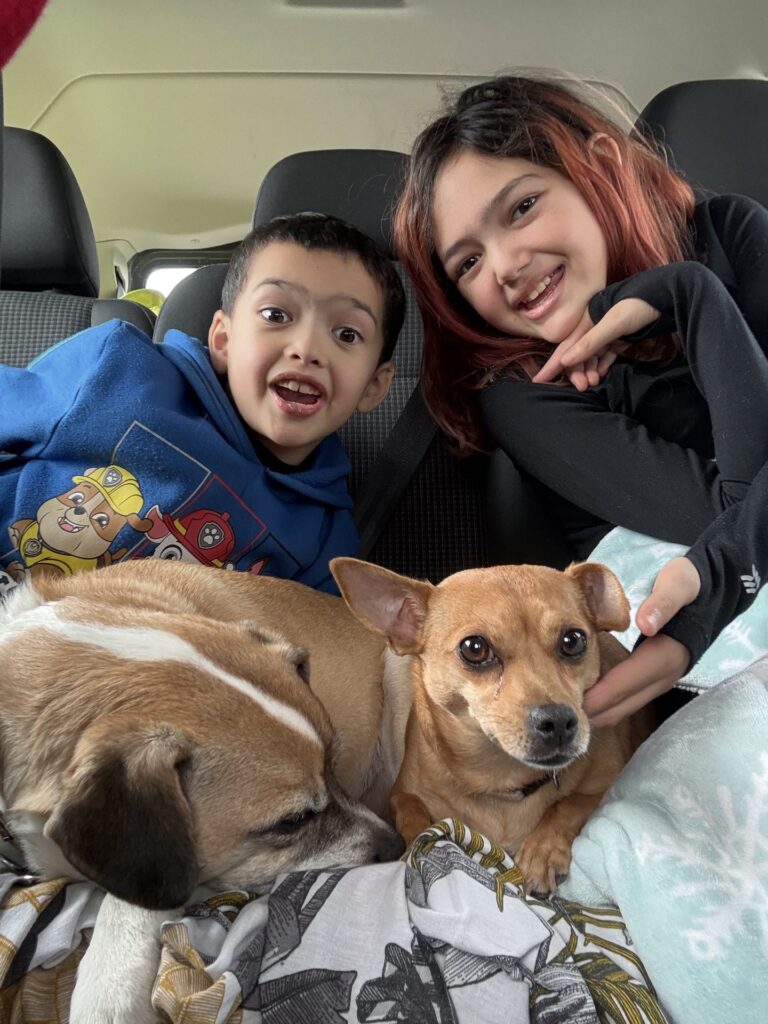
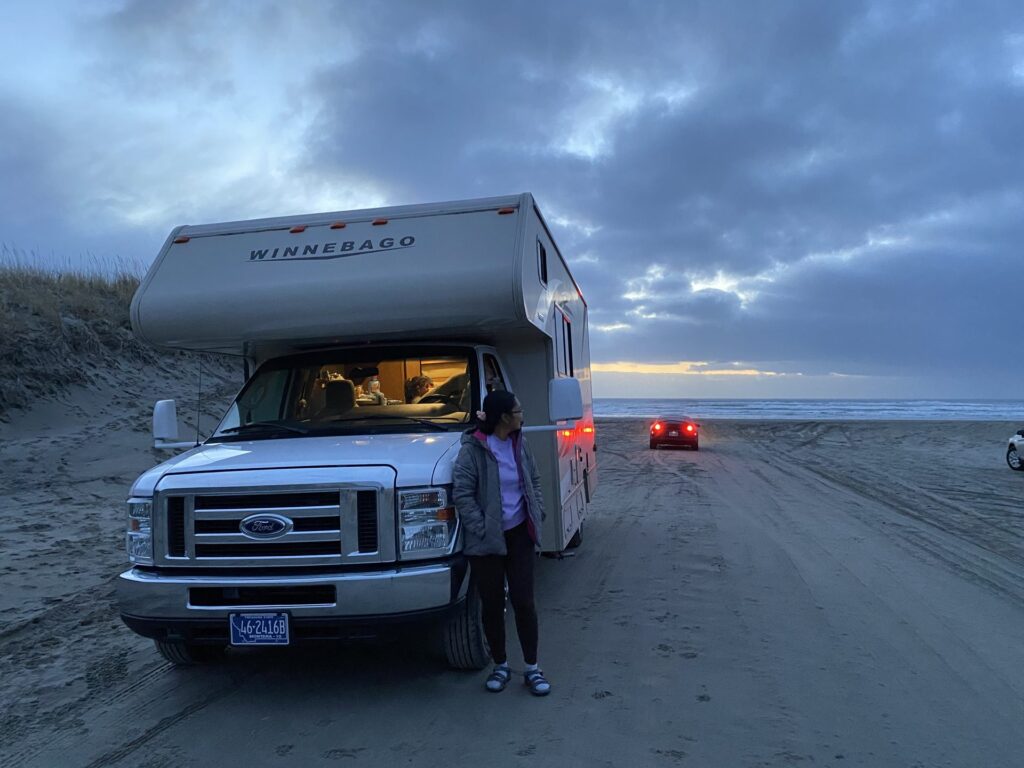
We drive a Class C motorhome, a Winnebago. Inside are the two of us, our two kids and our dogs. On our Pacific Coast RV trip in December 2020 we also carried the kids’ grandmother, our nephew and four dogs: Grandma’s dogs Oscar and Claudine, River, and our late Kuma. That was six people and four dogs in one RV, from Washington to San Diego.
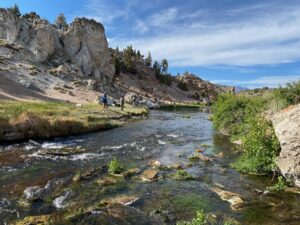
We usually sleep on public land and at climbing areas. On our California Sierra road trip that meant the Alabama Hills near Tuttle Creek, the Buttermilks near Bishop, and national forest spots around Mammoth and June Lake. On the Pacific trip, where public land along the coast is scarce, we also used Walmart lots, casinos, rest areas and beach pull-offs. We used state parks and attractions as day stops, not as places to sleep.
Dispersed camping on BLM land
Dispersed camping means camping outside a developed campground, with no hookups, water or trash service. The Bureau of Land Management manages huge areas in the West, and much of it is open to dispersed camping. As of 2026, the BLM’s camping on public lands page sets out the main rules:
- Stays are generally limited to 14 days within any 28-day period. Limits vary by state and field office. When you hit the limit, you move, often 25 to 30 miles away.
- Camp within 150 feet of designated routes and do not make new tracks.
- Stay at least 200 feet from lakes, rivers and streams.
- Do not camp within 1 mile of campgrounds, trailheads or picnic areas.
- Fire rules change through the year. Check before you light anything, use an existing ring or a fire pan, and put fires completely out. In California you may need a campfire permit.
- Pack out all trash.
With kids, the 200-foot rule is easy to keep: it also keeps small children away from the water’s edge at night. Pick a spot that someone has already used, park on bare ground, and keep the dogs leashed around camp so they do not chase wildlife.
Dispersed camping in national forests
National forests allow dispersed camping too, but each forest sets its own details. The Forest Service’s Intermountain Region guidance is a good summary of the usual rules: stay for the number of days the forest sets, camp at least 200 feet from streams and other water, use existing sites, and confirm there are no fire restrictions before a campfire. Bury human waste 6 to 8 inches deep and 200 feet from water, camps and trails, and pack out toilet paper.
Stay limits are not the same everywhere. For example, as of 2026 the Tahoe National Forest limits camping to 14 days in a calendar year per ranger district, not 14 days at a time. Always read the forest’s alerts page before you go.
Use the Motor Vehicle Use Map
The most useful free tool for national forest camping is the Motor Vehicle Use Map, or MVUM. Each forest publishes one. According to the Forest Service’s MVUM guide, it shows which roads and trails are open to motor vehicles, which vehicle types are allowed, and seasonal rules. The key line: routes not shown on the MVUM are not open to public motor vehicle travel. MVUMs also show distance allowances, which is how far off a road some forests let you drive to camp. The maps are posted online, often on each forest’s maps page, and paper copies are often available at visitor centers.
The MVUM is plain black and white, so pair it with a forest visitor map or a phone map. For an RV, also look at the road itself before you commit. A road can be legal and still too rough or narrow for a motorhome.
Leave No Trace with kids and dogs
Free camping only stays open if people leave sites clean. The Leave No Trace seven principles are plan ahead and prepare, travel and camp on durable surfaces, dispose of waste properly, leave what you find, minimize campfire impacts, respect wildlife, and be considerate of others.
Kids can own some of these. Give them the trash bag for the last walk around camp. Make picking up dog waste their job on short walks. Teach them to leave rocks, pinecones and shells where they found them. Our Leave No Trace family guide has more ideas from climbing areas.
Overnight parking at walmart, casinos and rest areas
When there is no public land nearby, a lot can get you through the night. These are not campsites. You park, sleep and leave.
Walmart
Walmart does not have one national rule. Its FAQ says permission to park an RV is given by individual store managers, based on parking space and local laws, and asks RV travelers to contact management at each store first. Some cities ban overnight parking in business lots, and some stores do not own their lot. Seeing other RVs there does not mean it is allowed.
A good routine: go inside, ask at customer service, park where they tell you, and buy what you need while you are there. Do not put out an awning, chairs or slides that block lanes. Leave in the morning.
Casinos
Casino policies vary just as much. A casino may have a paid RV park, may ask you to register, or may not allow overnight parking at all. For example, Three Rivers Casino in Florence, Oregon, says all overnight RVs must register on arrival and display a permit. Call or ask at security or the front desk before you settle in.
Rest areas and pull-offs
Rest areas are run by each state, and time limits are posted at the entrance. They are for a rest, not a stay. Pull-offs are the same: check for signs, and remember that many park units ban overnight parking outright. At Point Reyes National Seashore, for instance, overnight RV parking or camping is prohibited throughout the seashore.

Beach driving and beach parking
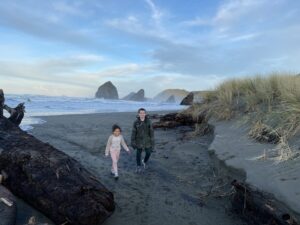
Some beaches allow vehicles on the sand. Very few allow you to sleep there. On the Oregon coast we drove our motorhome onto Sunset Beach near Warrenton and spent the evening on the sand. As of 2026, Fort Stevens State Park says street-legal vehicles may drive the ocean shore from Gearhart to the Columbia’s South Jetty, with driving banned north of the Peter Iredale access from noon to midnight, May 1 to September 15, and four-wheel drive strongly recommended. Oregon rules also prohibit camping on that shore, and that includes parking a vehicle so you can stay overnight. Drive on, enjoy the evening, and leave before night.
Other beaches have other rules, and many ban vehicles completely. Before you drive onto sand, find the managing agency’s page for that exact beach. Watch the tide, stay on firm sand, and know that getting a heavy RV stuck is expensive. More on this beach in our north Oregon coast with kids post.
Dogs in national parks: the b.a.r.k. Rule
National parks are strict about pets, and the rules differ by park. The National Park Service sums up pet manners with the B.A.R.K. Ranger rule:
- Bag your pet’s waste
- Always leash your pet
- Respect wildlife
- Know where you can go
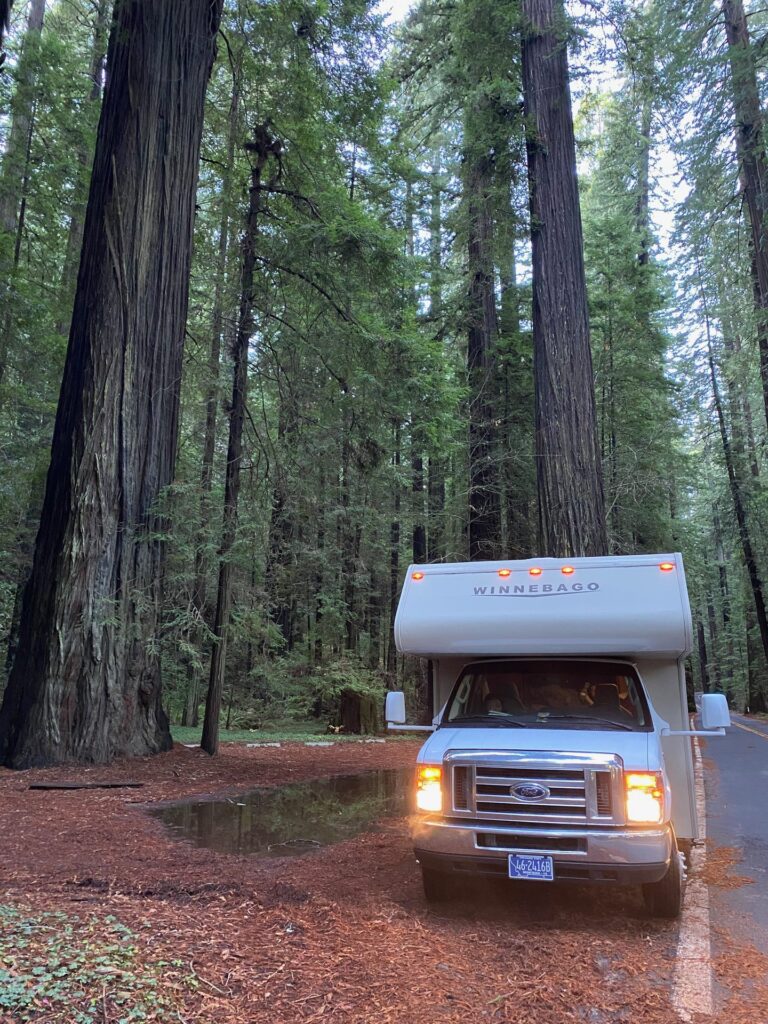
“Know where you can go” is the one that shapes a trip. In Redwood National and State Parks, as of 2026, pets are not allowed on trails but may be on beaches, roads, picnic areas and developed campgrounds on a leash no longer than 6 feet. California state parks generally use a 6-foot leash rule and do not allow dogs on most trails or beaches. Oregon State Parks allows dogs on most ocean beaches with a leash no longer than six feet. With several dogs, a park day may mean splitting up: some walk the trail, someone walks the dogs on the beach or road. We go into the redwood rules in our Crescent City redwoods and Avenue of the Giants posts.
Leaving dogs in the RV: heat and cold
On our California trips the dogs stayed in the RV while we walked trails in parks where dogs are not allowed. That only works in mild weather and for short walks, and some parks do not allow it at all.
Heat is the big danger. The American Veterinary Medical Association’s page on pet safety in vehicles says a parked vehicle can warm about 20°F in 10 minutes and more than 40°F in an hour, even on a mild day. On a 70°F day, the inside can pass 110°F within an hour. Cracking the windows makes no difference. An RV is bigger than a car, but it is still a metal box in the sun.
Cold matters too. The AVMA says leaving a pet in a vehicle on a chilly day is not much better than leaving it outdoors, and that young, old, ill or thin pets should never be left in cold cars. On a December coast trip, that means short stops, blankets, and never leaving dogs alone in an unheated RV overnight.
Park rules can be stricter than common sense. Oregon State Parks says never leave a pet unattended in a vehicle. California state parks rules say dogs must not be left unattended. When in doubt, one adult stays with the dogs.
Making it work with kids
Small kids do well in an RV when the days are short and the stops are many. A few habits help us:
- Park before dark. Finding a dispersed site or asking at a store is much easier in daylight.
- Keep a dog kit by the door: leashes, waste bags, water bowl and towels for wet paws. Our packing list for traveling with a dog has the full list.
- Let the kids walk the dogs with an adult. It burns energy and teaches the leash rules.
- Carry a first aid kit that covers kids and dogs. Our family first aid kit guide is a good starting point.
- Bring more water than you think. Dispersed sites have no taps.
If your kids are new to camping, start with our post on camping with toddlers. For trip ideas, read our Pacific Coast RV road trip and our California Sierra road trip, and see the Alabama Hills for one of the public land spots where we have camped.