Photography: from a Pentax K1000 to Nikon and Sigma
Some links on this page are affiliate links. If you purchase through one of these links, Nomadic Clan may earn a commission at no additional cost to you.
I have been taking photos since the 1980s. My first real camera was a Pentax K1000. Since then I have photographed life in Spain, China, Thailand, Mongolia and California, plus a lot of crags, markets, beaches and family road trips in between.
This page is the start of everything photography on Nomadic Clan. It tells you where I came from, what I shoot with now, and where to find the guides.
It started with a Pentax K1000
The K1000 was a simple, fully manual film camera. You set the aperture. You set the shutter speed. A small needle in the viewfinder told you if the exposure was close. The battery only ran the light meter, so the camera kept working even when it died.
That camera taught me the basics I still use every day. How aperture changes depth of field. How shutter speed freezes or blurs motion. How light decides almost everything.
Then I moved to slide film
I moved to slides quickly. I shot mostly Kodachrome and Fujichrome, mainly Velvia and Provia.
Slide film does not forgive mistakes. It has very little room for error in exposure, and there is no print lab to rescue you. If you got the light wrong, the slide showed it. That pushed me to meter carefully, wait for good light and think before I pressed the shutter.
It was also slow. You shot a roll, sent it off and waited to see what you had. Every frame cost money, so every frame counted.
Climbing and landscapes on film
Most of my film years went into two subjects: climbing and the landscapes around it. Both are hard on a film photographer.
Climbing on film taught me patience and positioning. A roll held 36 frames, so you could not fire off a burst and hope one was sharp. You had to read the route, guess where the climber would pause for the hard move, and be ready in the right spot with the focus already set. Those habits still shape how I shoot climbers today, even with a fast digital camera.
Landscapes were where slide film shone. Velvia became famous with landscape photographers for its saturated color, and it rewarded early starts and soft light. Kodachrome had a finer, more natural look and has lasted remarkably well. Kodak stopped making Kodachrome in 2009, and the last lab stopped processing it in 2010, which makes those old slides feel even more precious now.
Shooting slides also changed how I saw a place. Because every frame cost money, I walked more and shot less. I looked for the one composition that told the story instead of ten that almost did. That is still the best advice I can give any travel photographer.

A late adopter of digital
I was not quick to switch to digital. My first digital camera was a Sony Mavica, which saved each photo to a 3.5-inch floppy disk. It was clever, and it was a long way from slide film.
The Mavica was a strange bridge between two worlds. The files were tiny by today’s standards, and a single disk held only a handful of photos. But I could see the picture the moment I took it. After years of waiting for slides to come back from the lab, that felt like magic.
Once I made the move, I embraced it. Digital let me see the shot right away, shoot more, learn faster and share photos from anywhere. For someone living and traveling abroad, that changed everything.
I settled on Nikon. My Nikon D80 was the center of my bag for years. Later I added a used Nikon D7500. My Nikon 80–200mm f/2.8 has been with me for more than twenty years.

What I shoot with now
Today I shoot Nikon bodies with mostly Sigma lenses. Sigma gives me the image quality I want for less than the matching Nikon lens. My everyday lenses are the Sigma 24–70mm f/2.8 Art and the Sigma 70–200mm f/2.8 Sports. A Sony RX100 III and my phone cover the days when a DSLR makes no sense.
You can see every camera, lens and bag, with what I use each one for, in my camera bag.
How I approach photography today
My subjects have not changed much since the K1000 days. I still photograph climbing and the landscapes around it. What has changed is the people in the frame. These days the climbers are often my own kids, and the landscapes come with a family road trip or a new country attached.
I shoot RAW and edit in Lightroom, but I try to get as much right in the camera as I did on film. I would rather spend an extra minute choosing where to stand than an hour fixing a photo later. Some of my travel images now earn their keep through stock agencies, which is one more reason to shoot carefully.
I also try to keep photography from taking over the trip. A camera is a great reason to slow down and look closely at a place. It is a bad reason to miss the moment with the people you came with. Some days the big camera stays in the bag and the phone does the job.
Places that shaped my photography
Living abroad changes what you photograph. When a place becomes home, you stop chasing the famous view and start noticing ordinary life: the market on a Tuesday, the light in your street at five o’clock, the crag the locals actually climb.
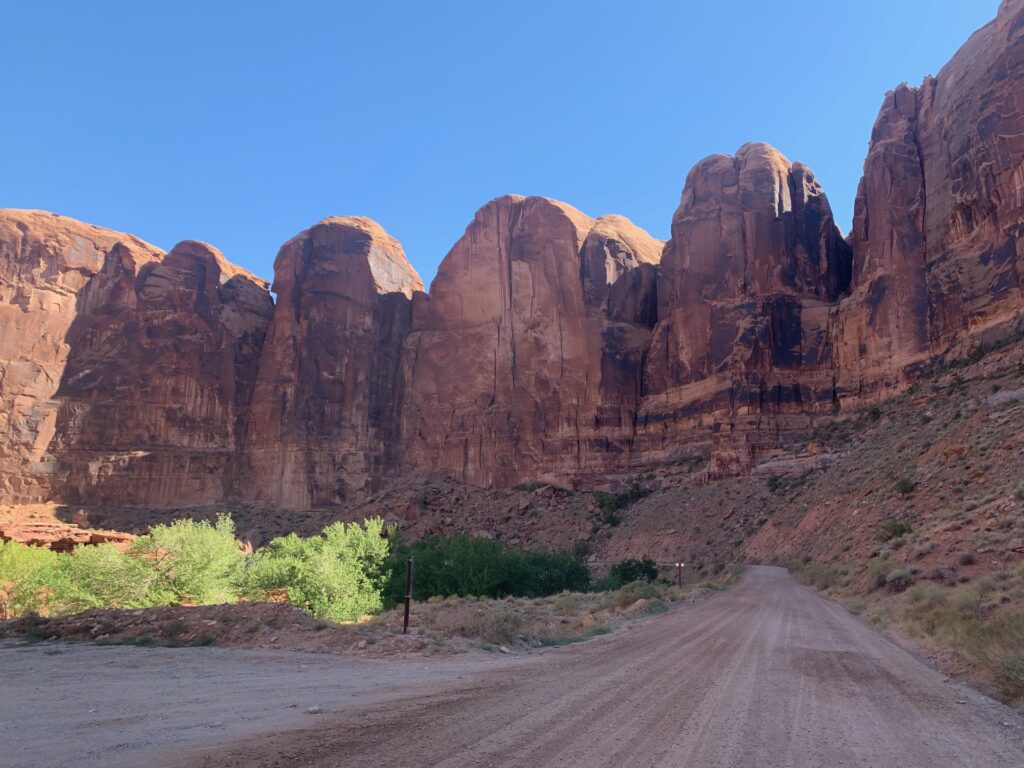
Morocco gave me souks full of color and some of the most dramatic rock I have stood under, from the Todra Gorge to the cedar forests around Ifrane. The American West gave me red sandstone at Moab and the granite of Yosemite. In France, the Ardèche taught me to work with deep canyons and limestone. Southeast Asia, from Thailand to Indonesia, keeps pushing me to handle harsh tropical light, sudden rain and busy streets.
Each place forced a different skill. Bright desert rock means watching highlights. Dark forests mean slower shutter speeds and a steady hand. Crowded markets mean fast reactions and respect for the people you photograph. That variety has taught me more than any course or new camera.
One rule holds everywhere: ask before you photograph people up close, especially children and older people in traditional communities. A smile and a gesture toward the camera is usually enough. If someone says no, put the camera down and move on.
What film still teaches me
- Light comes first. No sensor fixes bad light. I still plan around golden hour.
- Get the exposure right in camera. Editing helps, but a good exposure saves time.
- Slow down. Fewer, better frames beat hundreds of rushed ones.
- Learn manual settings. Once you understand aperture, shutter speed and ISO, any camera makes sense.
If you are starting out today
You do not need a film camera to learn what film taught me. You can build the same habits with any camera you own.
Try a 36-frame day. Go out for a few hours and allow yourself only 36 photos, the length of an old roll. You will find yourself looking harder, waiting for light and thinking about every frame. Then compare those 36 to a normal day of shooting. Most people are surprised by how much better the limited set is.
Learn one manual setting at a time, starting with aperture. Shoot in the first and last hour of daylight. And look back at your photos before you buy new gear. Most of the time the next step forward is a habit, not a lens. My ten lessons for better travel photos is a good place to start.
Start here: photography guides
Take better travel photos
- Travel photography tips: 10 lessons I learned the hard way. Ten lessons from Iceland, the Swiss Alps, Venice and Japan on light, exposure, white balance and patience.
- Street photography while traveling. How to photograph markets, alleys and everyday life in a new city without being intrusive.
- Winter travel photography. Getting bright snow, cold batteries and short winter light to work for you.
- Travel videos with your smartphone. Simple ways to shoot and edit better travel clips with the phone already in your pocket.
Photograph climbing and the outdoors
- How to photograph rock climbing from the ground. Angles, lenses and timing for photographing climbers, including your own kids, from the base of the crag.
Gear I use
- My camera bag: the Nikon and Sigma gear I travel with. Every body, lens and bag I carry, what I use each one for, and where to buy it new or used.
Earn from your photos
- How to make money with stock photography. How I license travel photos through stock agencies, and how you can start.
- Stock photography on a cruise. How one cruise can fill a stock portfolio, port by port.
New guides land here as I write them. Coming next: my years with the Nikon D80, why I use Sigma lenses on Nikon, and buying used camera gear.