Yosemite Valley works for families because the best of it is close to the road. Tunnel View is a short walk from your car, the Lower Yosemite Fall loop is a flat, paved mile, and Swan Slab, where our kids climbed, sits right next to Camp 4. The hard parts are logistics: parking, RV size, where dogs can go, and where you sleep. As of 2026 you do not need an entry reservation, but you do need a plan for busy days.
We have been to Yosemite more than once as part of our big California loop in a Class C Winnebago, with the kids and the dogs. The photos here are from October 2021, a trip that also took us to Fish Camp, Oakhurst and Coulterville. This post is one stop on that loop; the full route is in our California Sierra road trip with kids.
Do you need a reservation for Yosemite in 2026?
No. Yosemite announced in February 2026 that it will not use a timed entry reservation system in 2026. Instead the park is using real-time traffic monitoring, active parking management in the Valley, extra staff at busy intersections and congestion alerts. The park suggests coming on weekdays, when parking and traffic are usually better, and planning early for weekends and holidays. This changes from year to year, so check the NPS site before you go.
You still pay the entrance fee. As of 2026 a private vehicle, including an RV, is $35 and good for seven days. A Yosemite annual pass is $70, and the America the Beautiful pass is $80 for U.S. residents. Non-U.S. residents aged 16 and over pay an extra $100 each unless they enter on an annual pass. If you visit several parks in a year, our national park pass guide explains which pass makes sense.
Tunnel View: the first stop with kids
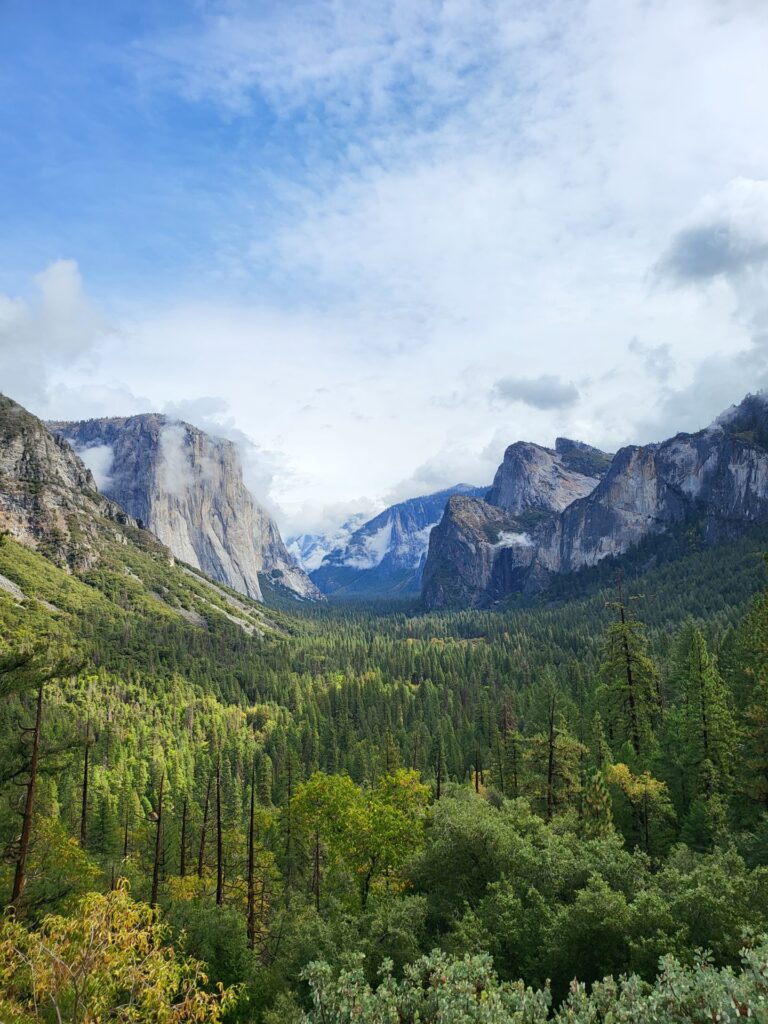
Tunnel View is the classic first look at the Valley. From the overlook you see El Capitan, Half Dome, Sentinel Rock, Cathedral Rocks and Bridalveil Fall in one frame. It is wheelchair accessible, with a short paved walk from the parking area, and it is reachable by vehicle all year. That makes it an easy win with tired kids: get out, look, take the photo, get back in.
If the lot is full, keep going and stop on your way out instead. The park notes the view is especially striking at sunset or after a storm clears.
Half Dome views without the Half Dome hike
You do not need to hike Half Dome to see it well. With kids, we looked up at it from the Valley floor through the pines. Flat, paved walks like the Cook’s Meadow trail keep the big walls in view without a long hike, and leashed dogs are allowed on that paved trail too.

The Lower Yosemite fall loop
If you only do one walk in the Valley with kids, make it the Lower Yosemite Fall trail. It is a one mile paved loop with about 50 feet of elevation gain, and the NPS says to allow about 30 minutes. The eastern part is wheelchair accessible when it is clear of ice and snow. Strollers and leashed dogs are allowed.
Timing matters. The falls are strongest in spring and early summer, and you will get some spray near the footbridge. From late July or August through October the fall is often dry. We were there in October, so plan around that if water is the main attraction. There is no parking at the trailhead itself; use the free Valley shuttle (stop 6) or park in a nearby lot and walk.
Climbing with kids at Swan Slab
Swan Slab is where our kids climbed in Yosemite. It is a granite slab across the road from Yosemite Valley Lodge, right by Camp 4 and on the way to the Yosemite Falls area. Mountain Project lists 35 routes there, mostly trad and top rope, with easy options like Oak Tree Flake (5.5) and Bay Tree Crack (5.6). It is popular with new climbers, so expect a crowd.
A few practical points. It is not a sport crag, so you need trad gear and the skills to build anchors, or a guide. The park points families who want instruction to the Yosemite Mountaineering School and Guide Service. Yosemite also has peregrine falcon closures each year from March 1 to July 15, so check the Camp 4 kiosk or the park’s climbing closure page before you rope up. Our kid-friendly climbing guide for the USA and our family climbing gear list cover how we set up a day like this.
Sunnyside Bench and Tuolumne Meadows
I also climbed at Sunnyside Bench, a popular cliff just right of Lower Yosemite Fall. You reach it from the Lower Yosemite Fall trail by crossing the bridge and walking a short way east. The Sunnyside Bench Regular Route (5.5, three pitches) is the classic there. It is multi-pitch and busy, so it is not where we would start young kids.
I also climbed in Tuolumne Meadows, up on Tioga Road, where the granite domes sit in high meadows. That area is only reachable when Tioga Road is open, usually from late May or early June until about November. From October 15 there is no overnight parking on Tioga Road.
Autumn colors in Yosemite Valley
October is a good month for color in the Valley. The NPS says bigleaf maples turn bright yellow along the south wall, sugar maples near the Yosemite Chapel go red, and dogwoods, black oaks and cottonwoods add more color. Peak color is hard to predict. It usually arrives in late October and can last into early December, until the first heavy storms or hard frosts. Our October 2021 visit lined up with the start of that season.

A warm stop by the fire
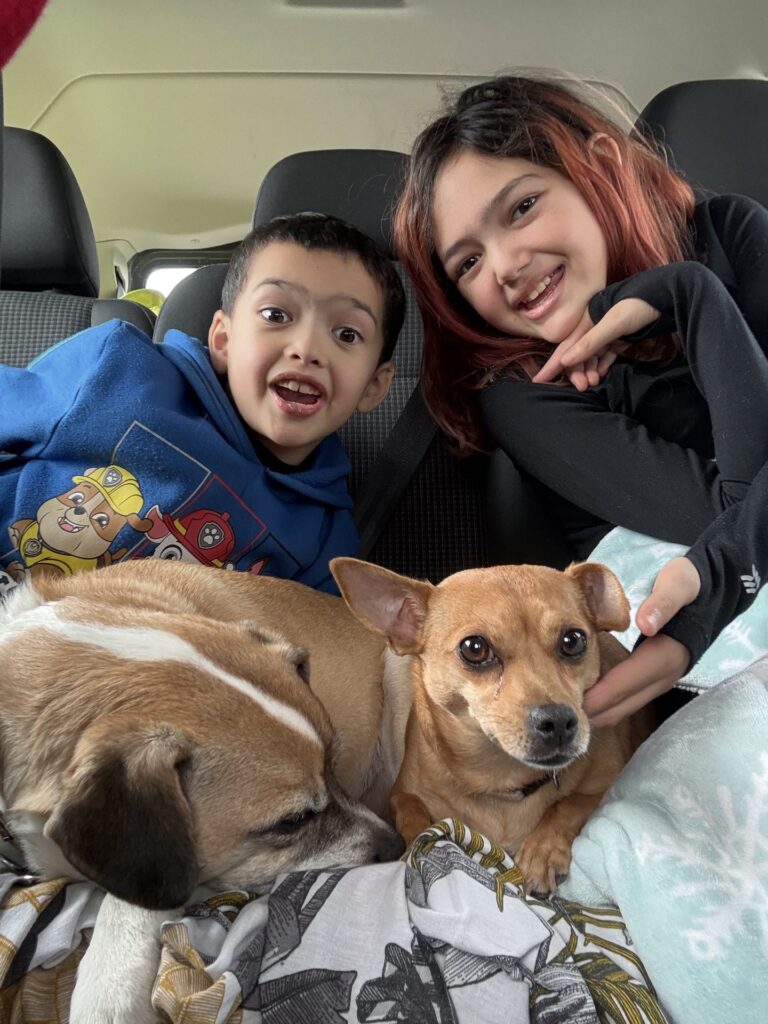
The photo at the top of this post shows the kids by a big stone fireplace inside one of the park’s lodges. Lodge lobbies are a good place to warm up, rest small legs and let everyone recharge between walks. Dogs are not allowed in lodging areas or public buildings, so plan who stays with them.
Getting around: the valley shuttle
The free Yosemite Valley shuttle is the easiest way to move around once you park. According to the NPS, both routes run from 7 am to 10 pm. The Valleywide route comes every 12 to 22 minutes and the East Valley route every 8 to 12 minutes, covering Yosemite Village, Curry Village, the Pines campgrounds and east Valley trailheads. Dogs are not allowed on shuttle buses, so if you have dogs with you, drive between stops or walk the paved paths.
Driving Yosemite in an RV
Yosemite is RV friendly in the Valley, but some roads are not. These limits come from the park’s vehicle restrictions page, as of 2026:
Highway 41 (Wawona Road) and Highway 120 (Big Oak Flat Road) allow single vehicles up to 45 feet and stay open all year. Highway 140 (El Portal Road) allows 45 feet single or 60 feet combined. Glacier Point Road is limited to 30 feet past the Sentinel Dome and Taft Point trailhead, with no trailers. The Mariposa Grove Road has a 21 foot limit and no trailers. Hetch Hetchy Road has a 25 foot limit and an 8 foot width limit, and the park warns that most RVs under 25 feet are wider than 8 feet. Chains may be required on any road from October through April.
For parking, the park’s RV page says Class C rigs like ours can use the day-use lot at Yosemite Village or the lot west of Yosemite Valley Lodge. That second lot is handy for Swan Slab and the Lower Yosemite Fall loop. Lots can fill by late morning in summer, so arrive early.
The big rule: you cannot sleep in your RV inside the park outside a campground. Valley campgrounds need reservations from about April through October. Upper Pines takes RVs up to 35 feet, Lower and North Pines up to 40 feet, and Upper Pines has the only dump station in the Valley. We usually skip campgrounds and look for public land. Near Yosemite, that means national forest land outside the park. In California national forests, dispersed camping is usually limited to 14 days, you need a free California campfire permit for stoves and fires, and you should check the local ranger district for fire restrictions first.
Yosemite with dogs
Dogs can come, but they cannot go most places. Under the park’s pet rules, leashed dogs (6 feet maximum) are allowed on fully paved roads, sidewalks and bike paths, which includes the Lower Yosemite Fall trail, Bridalveil Fall trail, the paved Cook’s Meadow trail and the paved road to Mirror Lake. They are allowed in campgrounds except walk-in and group sites, so not at Camp 4. They are also allowed on the Wawona Meadow Loop.
They are not allowed on other trails, even if you carry them, or in meadows, on beaches, in the water, in public buildings, on shuttles or in lodging areas. On walks where dogs were not allowed, our dogs stayed in the RV. If you do that, watch the temperature and keep pet food stored like human food, because it counts as bear food.
Yosemite runs the B.A.R.K. Ranger program: Bag waste, Always leash, Respect wildlife, Know where you can go. You can pick up a pledge card at any visitor center, which is a nice way to get kids invested in the dog rules. Our post on what to pack when traveling with a dog has the rest of our dog kit.
Where to see giant sequoias: Mariposa Grove, not the valley
There are no giant sequoias in Yosemite Valley. To see them, head to the Mariposa Grove near the South Entrance. It is Yosemite’s largest sequoia grove, with over 500 mature trees. The Big Trees Loop is 0.3 miles, easy and wheelchair accessible. The Grizzly Giant Loop is 2 miles with about 300 feet of gain.
Most visitors park at the Welcome Plaza and ride the free shuttle. In 2026 it runs about every 15 minutes, from 8 am to 5 pm in late September and October and until 3:30 pm in November, weather permitting, then stops for winter around November 30. Dogs are not allowed anywhere in the grove, on the grove road or on the shuttle. If you want more big trees, our Sequoia with kids post covers Sequoia National Park.
Fish Camp and the Sugar Pine steam train
Just outside the South Entrance on Highway 41, the Yosemite Mountain Sugar Pine Railroad in Fish Camp was one of our stops in October 2021. The narrated Logger steam train ride takes about an hour, and as of 2026 fares start at $37.10. The railroad lists its season as April through December, with themed trains such as an evening Holiday Magic Train later in the year. It is about 10 minutes from the park’s south gate, and leashed, friendly dogs are welcome. Check the schedule on the railroad’s site before you go, since days and times change by season.
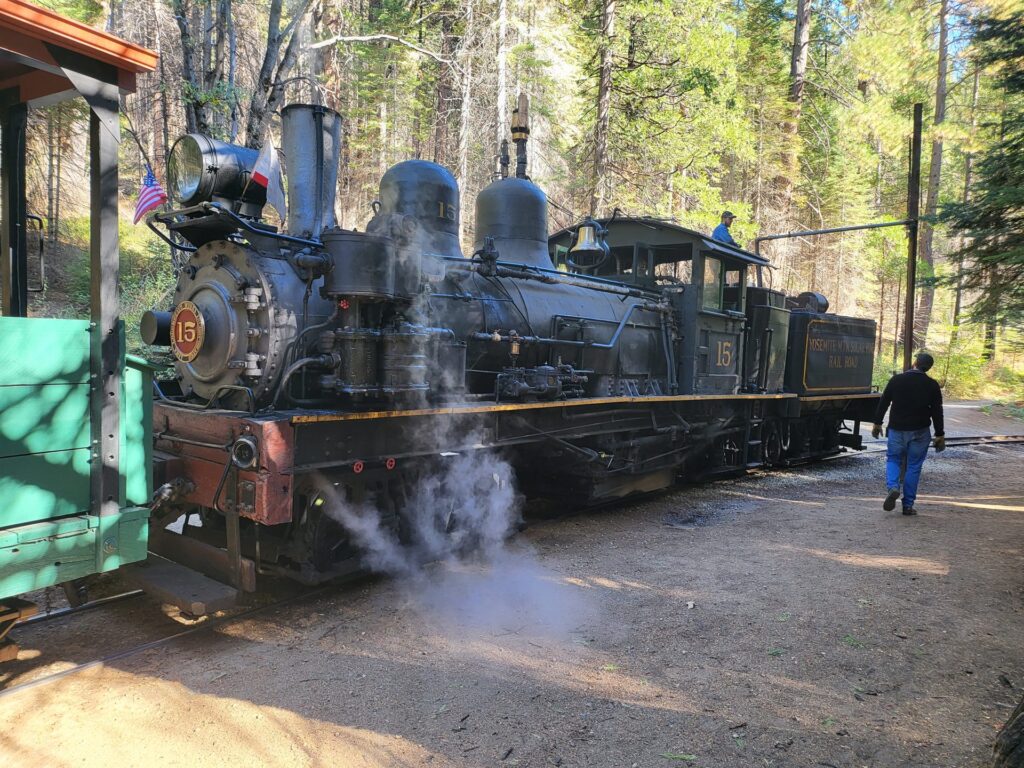
The forest around Fish Camp also has big hollow logs, and the kids explored them.

Oakhurst as a base, and a stop in Coulterville
Oakhurst, a foothill town further down Highway 41 below Fish Camp, works well as a base for the south side of the park. You get groceries, fuel and services before you head up to the Mariposa Grove and the Valley. One of our photos from the Oakhurst area is a wooden boardwalk through a meadow, the kind of short, flat walk that suits kids.

Coulterville is a Gold Rush town on Highway 49 in northern Mariposa County, with more than 40 historic buildings and landmarks. The Northern Mariposa County History Center on Highway 49 tells the town’s story, and it makes a short, easy break on a drive between Yosemite and the rest of the Gold Country.
How Yosemite fits our California loop
On our loop, Yosemite comes after the Eastern Sierra and before Tahoe. If you are coming from US 395, see our US 395 Eastern Sierra with kids guide, and keep in mind that the Tioga Road link between the two is closed much of the year. From the Valley we head north to Lake Tahoe with kids, where the kids climbed again at Lovers Leap and Donner Summit.
For the whole route, the climbing stops and how we stitched several trips together, read our California Sierra road trip with kids.