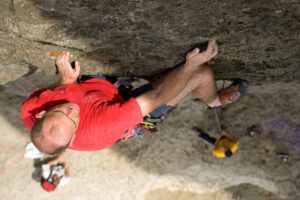
Quick answer: Hong Kong has excellent granite climbing just minutes from its skyscrapers. The best-known areas are Lion Rock above Kowloon, the Soho crags on the hillside above Soho, Beacon Hill and the sea cliffs of Tung Lung Island. Most climbing is sport, on crimps and slabs. Bring a rope, quickdraws and a helmet. The cooler, drier months from autumn to spring are the best time to go.
Hong Kong was never on my list of climbing trips. I went for a work assignment. When the work was done, my wife joined me, we caught up with old friends and we went looking for rock. What we found surprised us.
After a year on Asia’s tropical limestone, Hong Kong’s granite crimps and slabs felt fresh and technical. Behind the skyline, the food and the haze, the city hides crags on its hillsides and islands for every level.
Why climb in Hong Kong?
- Granite near the city. Many crags are a short ride from the subway or a ferry.
- Variety. Slabs, crimps, overhangs, sea cliffs and multi-pitch routes.
- Easy to combine with work. It is one of the best places in Asia to turn a business trip into a climbing trip.
Where to climb
Lion Rock
Lion Rock towers over Kowloon and offers some of Hong Kong’s classic multi-pitch routes. Expect a real hike to the base. We ran out of time to climb it on this trip, but it is worth planning a full day for.
The Soho crags
The Soho crags, on the hillside above the Soho district, were a revelation. I expected about 15 routes. We found more than 70, hidden in green hillside, with views over the towers below. After climbing, we walked down into Soho for dinner. Few cities let you do that.
Beacon Hill
For a quieter session, Beacon Hill is a short taxi ride from the subway. The routes mix slabs and overhangs, and the harbor views are excellent. It is popular with locals climbing after work.
Tung Lung Island
With two local friends, my wife and I took the ferry to Tung Lung Island, home to some of Hong Kong’s most loved sea cliffs. The main walls were busy, so we headed to the Sea Gully Wall, high above the water. The clean granite was sustained and exciting. There I found my favorite route of the trip, End of the World, and we had the wall to ourselves.
When to go
Autumn through spring is the best season. Summers are hot and very humid, and typhoons and heavy rain can close crags and stop ferries. Granite can be slick after rain, so give it time to dry.
What to bring
- A 60-meter rope and around 12 quickdraws for sport routes.
- A helmet. Loose rock and steep hillsides are common.
- Plenty of water. Humidity drains you fast, even in the cooler months.
- Insect repellent and a light rain layer.
New to climbing outside? Our guide on how to start roped climbing outside covers the gear and skills you need.
Getting there and around
- The subway (MTR) reaches the trailheads for most city crags. Taxis cover the last stretch.
- Ferries to Tung Lung Island run mainly on weekends and holidays. Check the schedule before you go, and do not miss the last boat back.
- The Hong Kong climbing community publishes route information and free topos online. Search for the Hong Kong Climbing website before your trip.
Is Hong Kong worth a climbing trip?
It may not be the first place climbers think of, but it is one of the best surprises in Asia. With a rope, a set of quickdraws and a few local friends, a business trip can turn into a climbing adventure. Pack light, follow the locals and let the city show you its hidden walls.
Frequently asked questions
Is there good rock climbing in Hong Kong?
Yes. Hong Kong has a wide range of granite crags, from city sport routes to island sea cliffs and multi-pitch lines.
When is the best time to climb in Hong Kong?
Autumn through spring, when it is cooler and drier. Summer is hot, humid and stormy.
Do I need a guide to climb in Hong Kong?
Not if you are an experienced outdoor climber. If you are new, connect with local climbers or hire a qualified guide.