Looking Glass Rock is one of my favourite climbing areas in the South. Whiteside Mountain, an hour or so away, is its wilder neighbour. I climbed both before we had kids. This is what I would tell a friend heading there now.
Both are multipitch, both are trad, and both reward climbers who are calm on run-out rock. Neither is a kids’ crag. If you are on a family trip, see our Blue Ridge Parkway road trip with kids guide for where the rest of the family can spend the day.
Looking Glass Rock at a glance
- Where: Pisgah National Forest, a short drive from Brevard, North Carolina.
- Rock: a granite dome about 600 feet high.
- Style: mostly trad, multipitch. The famous features are the eyebrows, horizontal ledges you climb between.
- Descent: most routes need two ropes to rappel.
- Gear: bring tri-cams, small cams and long slings. The eyebrows take odd placements.
- Guidebook: Southern Pisgah Rock and Ice.
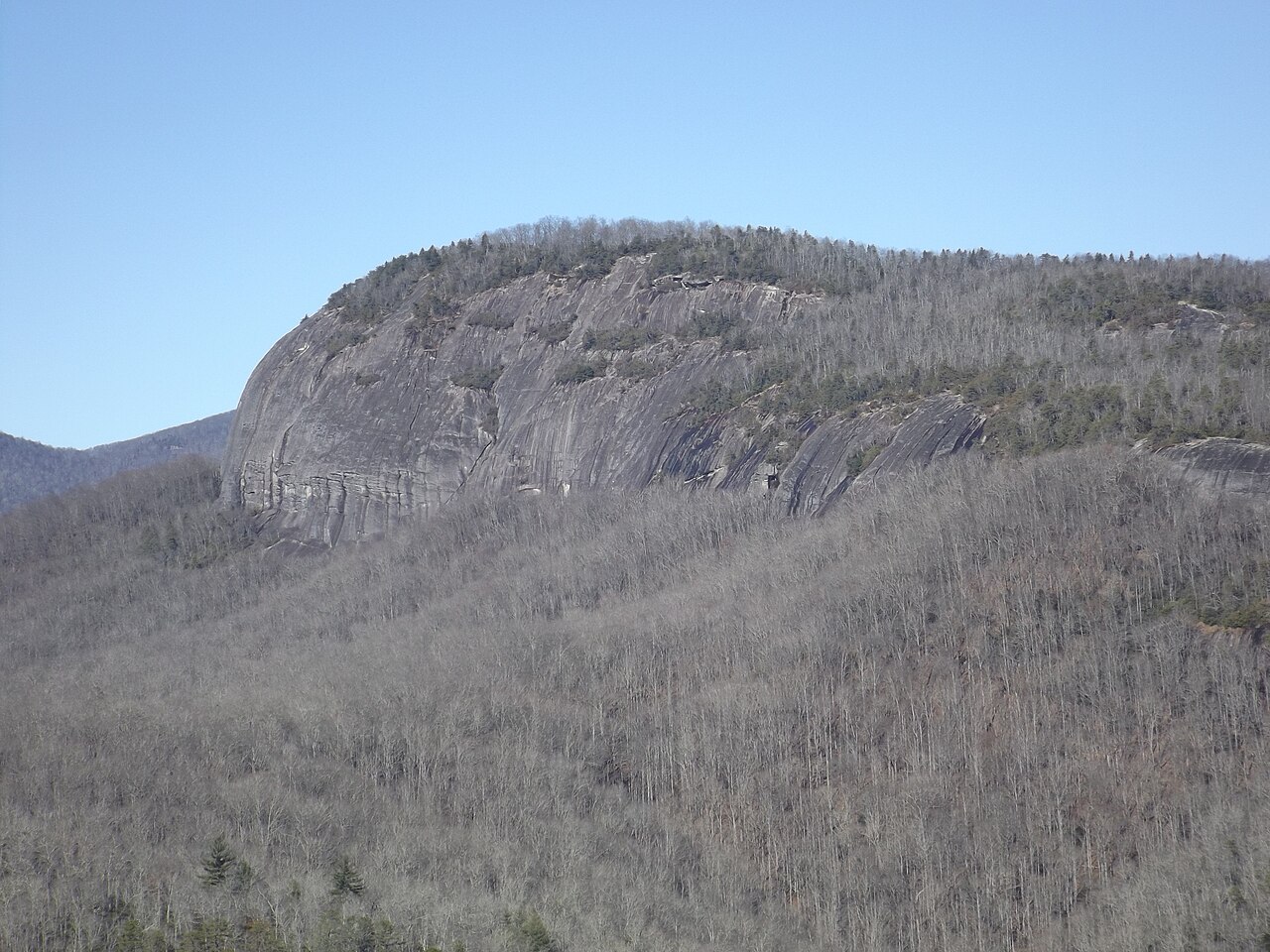
Three sides, three different crags
What I love about Looking Glass is how different each side feels. You can climb here for a week and never repeat the same style.
The Nose area
The Nose area has the classic moderate multipitch lines. The Nose (5.8) and Sundial Crack (5.8-) are the best-known routes, each about four pitches. Hyperbola (5.10a) is a step up. If you only have one day, start here.
The South Face slabs
The South Face is friction and slab climbing on shorter routes of one to three pitches, from about 5.6 to 5.12. Trust your feet. Protection can be far apart.
The North Face eyebrows
The North Face is steeper and shadier. It is the place for the bigger eyebrow climbing, harder free routes and the old aid lines. It also stays cooler in summer.
Peregrine falcons nest on part of the North Face. The Forest Service closes those routes every year from about January 15 to August 15. Check the current closure list before you go.
Getting to Looking Glass
From Brevard, take US 276 into Pisgah National Forest for about 5 miles. Turn left on FR 475. Parking depends on the side:
- South Side: the Slickrock Falls trail parking.
- Nose area and Sun Wall: the Sunwall trail parking, about 2 miles farther along the gravel road (FR 475B).
- North Side: a pullout a little past the Sunwall trail.
After Hurricane Helene, some forest roads and parking areas changed. You may have to park farther from the trailhead. Check the Carolina Climbers’ Coalition access page before you go.
Whiteside Mountain at a glance
- Where: between Highlands and Cashiers, North Carolina, off US 64.
- Rock: a pale gneiss locals call Whiteside granite. The Southeast Face is about 700 feet tall.
- Style: long, committing, run-out routes. Locals call it a “flight school” for a reason. Expect loose rock and spaced protection.
- Parking: a gravel lot off Whiteside Mountain Road. A day pass is bought through Recreation.gov.
- Closures: peregrine closures on part of the main wall, about January 15 to August 15.
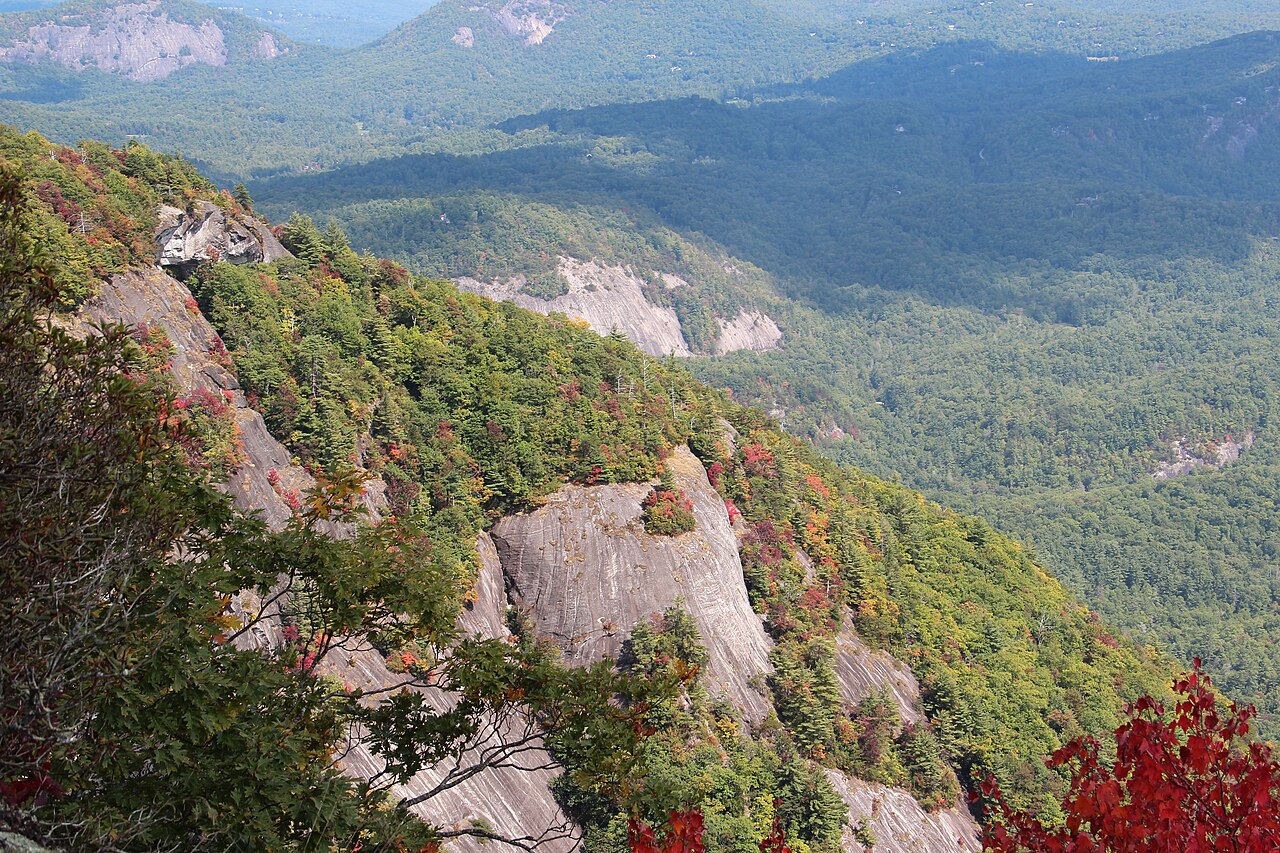
The Southeast Face
The Southeast Face is the main wall and where I climbed. The routes are long: Save the Shrimp (5.9-) has six pitches, and the Original Route (5.11a) has ten. This is not a place to test your limits. Pick a route well below your grade, start early, and carry rain gear. Weather here changes fast.
When to go
- Fall and winter: the best season at both crags. Cool, dry rock and clear days.
- Spring: good weather, but the peregrine closures are in place.
- Summer: hot and humid on sunny walls. Head for the North Face at Looking Glass, which stays in the shade.
Where to stay
Brevard is the easy base for Looking Glass, with food, gear and places to sleep. Pisgah National Forest has campgrounds, and dispersed camping is allowed in some areas. Check the forest’s current rules. For Whiteside, Highlands and Cashiers are closest.
Before you go
- Check closures: the Forest Service peregrine list and the Carolina Climbers’ Coalition.
- Bring two ropes for most Looking Glass descents.
- Climb well below your limit at Whiteside.
- Leave no trace. Both crags see a lot of hikers and tourists.
More climbing in the area: Linville Gorge, Table Rock and Shortoff.