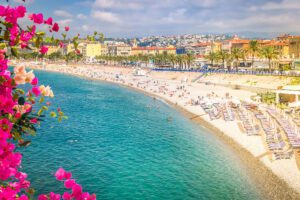
For a first trip to Spain, pick two or three bases and connect them by high-speed train. Madrid, Barcelona and Seville give most first-timers the best mix of art, food, architecture and atmosphere. Add Granada for the Alhambra, Valencia for families and beaches, or the Costa Blanca if your crew climbs. Trying to see “all of Spain” in a week is the most common mistake. Spain is big, and every extra move costs you half a day.
This guide is built around that idea. First, how to choose your bases. Then sample 7, 10 and 14 day routes by train. Then the top places and what each one is best for. Last, the practical things that catch first-timers out: tickets that sell out, late meal times, summer heat, tourist taxes and entry rules.
We have been to every region in this guide as a family: Barcelona and Catalonia, Madrid, Andalusia, Valencia and the Costa Blanca. Ask our kids for their favorite part of Spain and they will say the beaches.
How to choose your bases for a first trip
Think in bases, not stops. A base is a place you sleep at least three nights. From there you take day trips and come back to the same bed. With kids, this matters even more. Fewer packing days means fewer meltdowns, and you get to know a neighborhood.
A simple rule: one base for every three to five days. Seven days gives you two bases. Ten days gives you two or three. Fourteen days gives you three or four.
Spain’s high-speed rail network makes this easy, because Madrid is the hub. According to Spain’s official tourism site, the AVE reaches Valencia in under two hours and Barcelona, Seville and Málaga in about two and a half hours from Madrid. Trains to Valencia leave from Chamartín station, while those to Barcelona, Seville and Málaga leave from Atocha. Check your station before you go.
Choose your bases by what you want most:
- Art and big museums: Madrid.
- Architecture, beach and city in one: Barcelona.
- Classic Andalusia, flamenco and orange-tree plazas: Seville.
- Islamic palaces and mountain views: Granada.
- Kid-friendly science, parks and paella at the source: Valencia.
- Sun, coast and climbing: the Costa Blanca or Costa del Sol.
Sample routes by train: 7, 10 and 14 days
These routes assume you fly into one city and out of another (an “open jaw” ticket). That saves you a full day of backtracking. If you need a round trip, start and end in Madrid, since it connects to everything.
7 days: Barcelona and Madrid, or Madrid and Seville
Option A, Barcelona (4 nights) and Madrid (3 nights). This is the classic first trip. Barcelona gives you Gaudí, the old town and the beach. Madrid gives you the Prado, Retiro Park and tapas. The train between them is about two and a half to three hours.
Option B, Madrid (3 nights) and Seville (4 nights). Better if you care more about Andalusia than about beaches. From Seville you can do a day trip to Córdoba by train.
10 days: Barcelona, Madrid and Seville
Spend four nights in Barcelona, three in Madrid and three in Seville. Fly into Barcelona and out of Seville (or the reverse). If your kids are younger, swap Madrid for Valencia. Valencia is smaller, flatter and easier with a stroller, and it has the beach.
14 days: add Granada, Valencia or the coast
Start with the 10 day route, then add one of these:
- Granada (3 nights) after Seville. The train from Seville takes roughly two hours forty to almost four hours depending on the service and whether you change. Buses are a real alternative on this route.
- Valencia (3 nights) between Barcelona and Madrid. Good for families and food.
- Costa Blanca (4 nights) after Valencia. A coastal break for climbing and beach days. More on this below.
Avoid adding a fifth base in two weeks. You will spend the trip in stations.
We got around Spain mostly by rental car. A car makes beaches and crags easy to reach. If you are only doing big cities, the trains are easier: no parking, no city traffic.
The best places to visit in Spain, and who each one suits
Barcelona: architecture, beach and a big-city buzz
Barcelona is the easiest first stop for most people. The Sagrada Família, Park Güell and Casa Batlló are the headline sights. The Gothic Quarter is best explored on foot in the morning, before the crowds. La Boqueria market on La Rambla is worth a short visit, but eat elsewhere. The Picasso Museum is in El Born, next to the Gothic Quarter. Barceloneta beach is a metro ride away when the kids need a break from churches.
Best for: architecture lovers, families who want city and beach in one base, first-timers flying in from abroad.
We wrote a separate guide on seeing Barcelona’s Gaudí buildings, which goes into more detail: our Barcelona city tour.
Madrid: art, parks and tapas
Madrid is where the art is. The Prado is the big one. Retiro Park, with its boating lake and Crystal Palace, is a perfect afternoon with kids. The Royal Palace and Almudena Cathedral sit side by side. Plaza Mayor and Puerta del Sol are central and busy. For evenings, La Latina is the classic tapas area, while Malasaña and Chueca are lively neighborhoods with plenty of places to eat.
Best for: art, food, people who like a real working capital rather than a resort.
Seville: the Andalusia people picture
Seville is the city of orange trees, horse carriages and flamenco. The Real Alcázar is a royal palace with gardens kids love to explore. The Cathedral and its Giralda tower are next door. UNESCO lists the Cathedral, Alcázar and Archive of the Indies together as a World Heritage Site and calls the Cathedral “the largest Gothic building in Europe.” It also houses the tomb of Christopher Columbus. Walk the Santa Cruz quarter, then spend a late afternoon at Plaza de España and María Luisa Park.
If you want to see Seville at its most intense, Semana Santa (Holy Week) and the April Fair fill the city in spring. Book rooms early if your dates overlap.
Best for: atmosphere, flamenco, spring trips. Avoid July and August if you can (see the heat section below).
Granada: the Alhambra and the Albaicín
Granada is worth the trip for the Alhambra alone. The palace complex includes the Nasrid Palaces, the Alcazaba fortress and the Generalife gardens. Across the valley, the Albaicín is the old Moorish quarter. The Mirador de San Nicolás gives the classic sunset view of the Alhambra with the Sierra Nevada behind it. Sacromonte, with its cave houses, is next door.
Granada is also known for bars that serve a small tapa with each drink. It is a tradition, not a rule, so do not count on it everywhere.
Best for: history, photography, anyone who wants one jaw-dropping sight.
Valencia: the easiest city with kids
Valencia is Spain’s third-largest city and often the most relaxed one for families. The old Turia riverbed was turned into a long park that runs through the city, with playgrounds, bike paths and space to run. At the end of it is the City of Arts and Sciences. The Oceanogràfic aquarium there bills itself as Europe’s largest aquarium, so treat that as the venue’s own claim. Either way, plan three to four hours for it.
In the old town, see the Central Market, La Lonja (the silk exchange) and the Cathedral with its Micalet bell tower. Then eat paella. Paella is a Valencian dish, and this is the place to have it, at lunch, not dinner.
Las Fallas is Valencia’s huge spring festival. The main days run from 15 to 19 March, and the giant figures burn on the night of the 19th. It is loud, crowded and unforgettable. Book months ahead if you go then.
Best for: families, food, beaches without a resort feel.
Costa del Sol and the Andalusian coast
The Costa del Sol around Málaga is the sun-and-sea option. Málaga itself has a good old town and museums, and it has high-speed trains to Madrid. Nerja, to the east, has the Balcony of Europe viewpoint and large caves. Inland, Ronda sits on a gorge with a dramatic bridge. Marbella and Estepona are more resort-style. Use this coast as a final beach base, not a first-timer’s only stop.
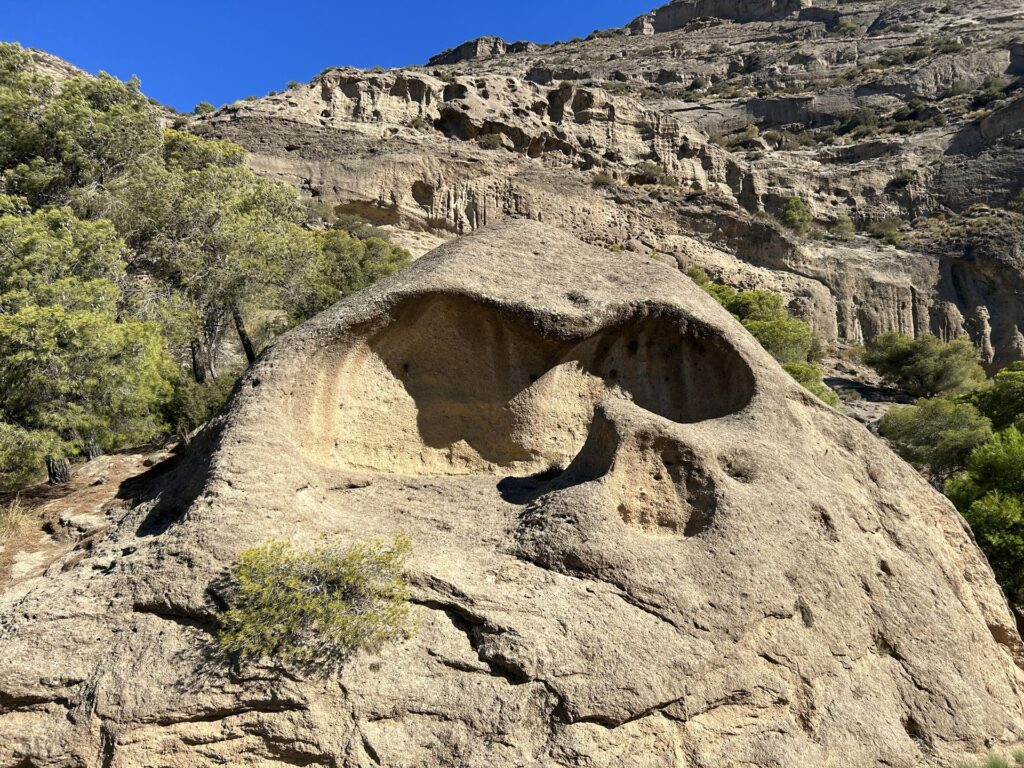
Best for: beach time at the end of a city-heavy trip.
Girona and Figueres: an easy day trip from Barcelona
Girona has colorful houses along the Onyar River, a well-preserved Jewish quarter and a big cathedral. Figueres is home to the Dalí Theatre-Museum. Both are easy day trips from Barcelona by train. Girona’s Temps de Flors flower festival takes place each May. These two make a great extra day, but they are not a base for most first trips.
Costa Blanca: for climbing families
If your family climbs, the Costa Blanca, north of Alicante, is the place to add. It has a long climbing season, limestone crags close to the sea and plenty of easier routes. It pairs well with a Valencia base. We wrote a full guide to kid-friendly climbing on the Costa Blanca, and you can find more crags on our Spain climbing page.
Book these early: the Alhambra and the Sagrada Família
Two sights catch first-timers out every year.
The Alhambra. The official ticket site says tickets are limited and recommends buying in advance through its official system. It also warns that other ways of buying do not guarantee availability. Tickets are in each visitor’s name, so you need a passport or ID number for each adult. Children under 12 do not need ID, but you enter an accompanying adult’s details on their ticket. Your Nasrid Palaces entry is for a fixed time, so plan the rest of the visit around it. In spring and autumn, book as soon as your dates are firm.
The Sagrada Família. The official site says tickets go on sale about two months ahead. Tickets are for a set time slot, and late arrivals may not be let in. You may find same-day tickets via QR codes on site, but only if there is space. Book online through the official site or app.
For both, use the official sites first. Resellers often charge more for the same entry. Check the official pages before you book, because rules and booking windows change.
Getting around Spain by train
Spain’s long-distance high-speed market now has competition. Renfe runs AVE (its standard high-speed service) and Avlo (its low-cost brand). Iryo and Ouigo compete on the main corridors, including Madrid to Barcelona. The mix of operators changes. For example, Renfe moved its Madrid to Barcelona Avlo trains to AVE-only service from 8 September 2025. Compare all operators before you book, because the cheapest fare on your route may be with any of them.
A few tips for families:
- Book early for the best fares, especially on Fridays and Sundays.
- Low-cost tickets usually have tighter luggage rules. Read them before you pick the cheapest seat.
- Arrive early. Big stations run a security check on high-speed trains.
- For slower or regional routes, like Seville to Granada, compare the train with the bus.
For more general planning help, see our guide to booking your first trip abroad.
Spanish meal times: plan around them
Spain eats late. Lunch is usually the main meal, served from about 2 pm to 3:30 pm. Dinner starts around 9 pm and can run past 11 pm. Many kitchens do not serve full dinner much before 8:30 pm.
With kids, this takes some planning. Make lunch your big meal. Have a late-afternoon snack (the Spanish merienda). Then do tapas early in the evening instead of a full sit-down dinner. You will eat well and still get the kids to bed.
Best time to visit Spain, and the summer heat
For a first trip, spring (April to June) and autumn (September to October) are the sweet spot. The weather is warm, the days are long and the cities are comfortable to walk.
Summer is hard in Andalusia. Seville’s average high in July and August is about 36°C (97°F), and heat waves push it higher. If you travel in summer, put Seville and Granada at the start or end of the day plan: sightsee early, rest in the afternoon, go out again at dusk. Or lean north and to the coast, where Barcelona, Valencia and the Costa Blanca are easier.
Winter is mild on the Mediterranean coast and quiet in the cities. It is a good time for museums and lower prices. The Costa Blanca’s climbing season is also in the cooler months.
Tourist taxes: expect a nightly charge
Several Spanish regions charge a tourist tax per person, per night. Catalonia, which includes Barcelona and Girona, is the one most first-timers will meet. As of April 2026, Barcelona’s combined regional rate and city surcharge runs from about €6 to €12 per adult per night, depending on the type of accommodation, plus 10% VAT. Guests under 17 are exempt, and the tax is charged for the first seven nights only. Barcelona’s city surcharge is set to rise each year through 2029. Check the current rate with your hotel before you go, because these numbers change often.
Entry rules: Schengen 90/180 and ETIAS
Spain is in the Schengen area. Visitors from visa-exempt countries, including the US, can stay up to 90 days in any 180-day period across the whole Schengen area. The 180 days are counted backwards from each day of your stay. The EU offers an online short-stay calculator if your trip is long or you have been in Europe recently.
ETIAS is the EU’s upcoming travel authorization for visa-exempt visitors. As of October 2026, official government guidance says it will start operating in the last quarter of 2026, and the fee has been set at €20. It is not required until it launches. Check the official EU ETIAS site for the current start date before you travel, and only apply through that site.
If you travel with kids and a lot of devices, an eSIM saves you hunting for a SIM shop on day one. We explain how we use them in our family eSIM guide. For more on timing a Europe trip, see traveling to Europe this summer.
The short version
Pick two or three bases. Use the train. Book the Alhambra and the Sagrada Família as soon as your dates are set. Eat lunch big and dinner late. Skip Andalusia in midsummer if you can. Then let Spain slow you down.