Finding adventure in the everyday isn’t about going somewhere new—it’s about seeing what’s been there all along. I pulled off the highway into a town that barely seemed to exist—a few faded storefronts, a gas station with a single pump, and a courthouse that did triple duty as the fire department, police station, and library. It wasn’t a destination. It wasn’t on any list of must-see places. It was the kind of town that, if you blinked, you might miss entirely.
But I needed to stretch my legs.
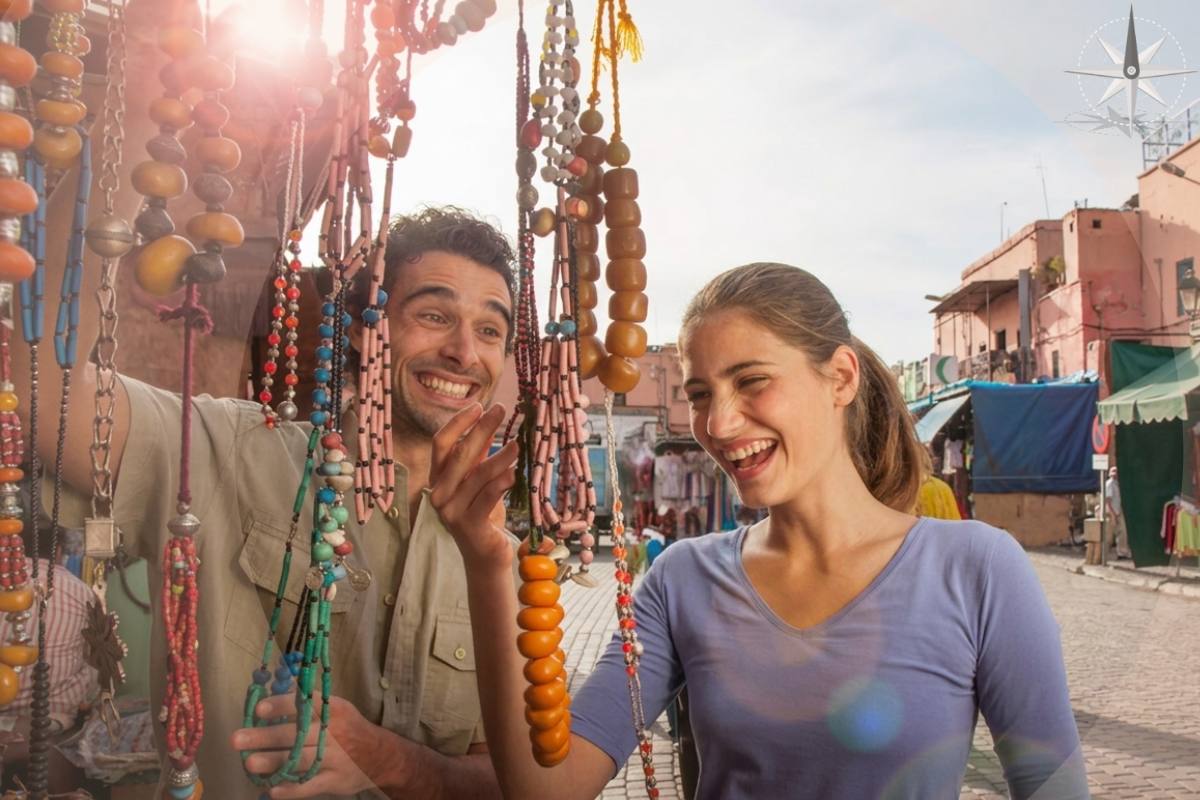
I was back in the U.S. for a brief visit, meeting with a client I had previously consulted for. After a couple of years of life in Morocco, with its bustling souks, wailing calls to prayer, and the scent of fresh bread drifting through narrow medinas, these vast, open highways felt strangely foreign.
I do this often—pulling off the road in places most people drive straight through.
When I’m in the destinations that travelers dream of—hiking volcanic trails in Indonesia, navigating the maze of Marrakesh’s medina, and finding temples hidden in Kyoto’s backstreets—I stray from the main roads. I take side streets, dirt trails, and unmarked paths, sometimes leading nowhere. I follow instinct more than a map, trusting that the best moments aren’t always planned.
But when I’m back in the U.S., I forget to do the same on roads I’ve driven before.
Maybe that’s why I pulled off in this town. Perhaps I just wanted to remind myself that exploration isn’t reserved for faraway places.
So I stopped.
I did not expect something remarkable, but I know that the places most people drive past often hold the best stories.
The Beauty in Someone Else’s Routine
I found the town’s only diner—not because I was hungry, but because places like this tell you more about a city than anything else.
The moment I walked in, I smelled bacon. The kind that lingers in the air, wrapping itself around every booth and counter stool like a warm memory.
Living in Morocco, where pork is nearly impossible to find, I had forgotten how much I missed something as simple as bacon. It wasn’t just the taste I longed for—it was what it represented. Lazy weekend breakfasts, the comfort of the familiar, the indulgence of something taken for granted until it’s gone.
Here, in this tiny roadside diner, bacon was nothing special. Plates of it arrived at tables without ceremony, tucked between eggs and toast, devoured by men in work boots reading the morning paper. The waitress poured coffee without asking, topping off cups before they were empty. No one rushed, but no one lingered unnecessarily. It was a rhythm, a pattern, a part of life so ingrained that it no longer needed acknowledgment.
I sat at the counter, watching as the morning unfolded around me—conversations that had likely been repeated a thousand times before, faces that had grown used to one another, routines that had settled into place over decades.
I’ve never lived anywhere long enough to have that kind of familiarity. I’ve never been a regular anywhere and never had a place where people knew my name, except climbing, or where I sat in the same booth week after week.
For the people in this town, this was just another morning.
For me, it was a novelty.
A Walk Through History at the Mining Museum
After finishing my bacon, lettuce, and tomato sandwich and coffee with vanilla creamer, I stepped outside, letting the cool air wake me up before returning to the road. That’s when I noticed the mining museum at the far end of Main Street.
It looked like a relic from another time—wooden siding cracked and peeling, a sign so faded I could barely make out the letters, and a parking lot that suggested visitors were few and far between.
The older man sitting in a chair by the entrance was the only sign of life, reading a book. I wouldn’t have known the museum was open if he hadn’t been there. He barely glanced up as I approached, as if he’d long given up expecting anyone to enter.
Inside, the air smelled of dust and old paper. The exhibits—if you could call them that—were sparse and arranged without real effort to catch anyone’s interest. Rusted pickaxes sat behind streaked glass cases, their labels yellowed and curling at the edges. A mannequin in tattered miner’s clothes, covered in dust and cobwebs, stood stiffly in the corner, its blank stare more haunting than educational.
At the entrance, instead of a ticket booth or admission stand, sat a wooden bucket—weathered, cracked, and worn smooth from decades of use. A hand-painted sign next to it read: “Donations appreciated.”
There is no suggested amount, and no one is watching to see if you gave. It is just an old bucket from a time when water had to be pulled from the earth, now repurposed to hold loose change from the few visitors who still wandered in.
It reminded me of the Musée de la Résistance in Castellane, France.
That museum, tucked away in the mountains of Haute Provence, had felt just as forgotten. Dedicated to those who had fought against Nazi occupation, it held relics of a time when people had risked their lives for freedom. Yet when I visited, the place was empty—no other visitors were there. There was no staff except for an older man sitting near the entrance, reading a book, waiting for the day to end.
Here, in this abandoned mining museum, the feeling was the same.
Another older man, another empty room filled with objects that had once mattered.
Pages from various diaries lay open under cracked glass, their ink faded but still legible. The words belonged to various inhabitants, detailing the isolation, the bitter winters, and the waiting. They wrote about long days, empty cupboards, children lost to sickness, and men who left town in the dead of night, never to return. I wondered how many people still escaped in the night and never returned.
There were no stories of fortune. No tales of riches.
Only survival.
Outside, the older man was still there, still reading, still waiting. I wondered how many more days would pass like this before he stopped showing up altogether.
And when that happened, would anyone even notice?
The Things We Stop Seeing
Instead of heading straight back to the highway that afternoon, I let curiosity lead me. A dirt road outside town caught my attention, winding through a stretch of untouched land.
It reminded me of a dirt road I biked in Yangshuo, China.
I once stopped at a tiny roadside stall where an older man was selling bowls of fresh noodles, working silently with quick, practiced motions. We didn’t share a language—only gestures—but he pointed toward a hill behind his shop after I paid for my food. Then he made a walking motion, his hands mimicking a slow climb, and waved me toward the path.
There was no sign, no indication that anything worth seeing was at the top. But I followed his direction, trusting the advice of a stranger with nothing to gain from sending me there.
When I reached the top, I understood.
Below me, Yangshuo stretched out like a dream. No tourists. There are no ticket booths. I stood silently, taking in a view no one else had told me about. I could see why Youngshou was on the face of the Chinese Yen.
It was the same feeling I had standing on this hill overlooking an American town most people wouldn’t think twice about.
Had this been where teenagers came to make out, carving their initials into tree trunks, dreaming of the day they’d finally leave town? And how many of them had left? How many returned?
The view was beautiful, but I had the distinct feeling it was a place more meaningful to those who had once called it theirs.
I thought about how often we search for adventure in faraway places, never realizing how much of it is already around us.
Finding adventure in the everyday isn’t about going somewhere new—it’s about seeing what’s been there all along.