
The Great American Road Trip: 7 Routes to Add to Your Bucket List Right Now
Why the American Road Trip Is a Category of Its Own
I want to start with something that most road trip guides skip over entirely. The reason the American road trip has a mythology that no other country’s road travel has developed is not because the roads are better or the cars are bigger. It is because the scale of the country makes driving the only mode of travel that lets you actually feel the transitions.
On a plane from New York to Los Angeles you sit in a pressurized tube for five hours and then you are somewhere else.

On the road you watch the country change underneath you, hour by hour: the skyline giving way to suburbs, the suburbs giving way to farmland, the farmland giving way to the Appalachian hills, the hills dropping into the Tennessee valley, the valley opening into the Gulf coastal plain.
That sequence is the point.
But Wait… There’s More
Jack Kerouac understood this when he wrote On the Road in 1957 and the book has been sending readers to their cars and out onto the highway ever since.
The seven routes in this guide represent the breadth of what American road travel can offer: Pacific coastline, desert silence, mountain wilderness, the mythological history of Route 66, the geological extravagance of Wyoming, the long green serenity of the Blue Ridge, and the agricultural heart of the Mississippi corridor. Each one is a different country contained within the same country.
On a plane from New York to Los Angeles the country disappears beneath the clouds. On the road you feel every state line. That is the difference the American road trip is built on.
This article gives you the overview and the decision framework. Every route I will share with you links to a full dedicated guide that covers the specific stops, logistics, driving times, accommodation, and planning notes in complete detail. Use this as the starting point and the full guides as the operational documents.
How to Choose the Right Route for Your Family
Seven routes is a long list and most families doing a road trip have a specific window of time, a specific geographic base, and specific requirements around what the journey needs to deliver.
Before getting into the routes themselves, here is the framework we use when recommending one over another.

If you are traveling with children under 10, the routes that deliver the most reward for the least logistical complexity are the Pacific Coast Highway for its accessible coastal stops, the Blue Ridge Parkway for its car-accessible viewpoints and moderate hikes, and the Grand Teton to Yellowstone loop for its wildlife density and family-scale trail network.
These three routes give young children something to look at and do without requiring long car stretches between activities.
If you are traveling with teenagers or adults who want cultural depth alongside landscape, Route 66 and the Great River Road both run through a density of American history that rewards people old enough to engage with the context. The full Route 66 corridor from Chicago to Santa Monica covers eight states and over a century of American cultural history. The Great River Road traces the Mississippi from Minnesota to the Gulf Coast through the birthplaces of American jazz, blues, and literary culture.
Something To Consider As a Nomad/Expat Family
If you are a nomadic family doing worldschooling or an extended slow-travel stay, the Seward Highway in Alaska and the Nevada stretch of Route 50 both offer extended wilderness time and the specific quality of attention that comes from driving through genuinely empty space.

These are not routes for people who need to be continuously entertained. They are routes for people who understand that the space between things is as worth experiencing as the things themselves.
PLANNING NOTE
The America the Beautiful annual pass at $80 covers entrance fees at every National Park Service site in the country. Three of the seven routes below include national parks as primary destinations. If your itinerary touches Yellowstone, Grand Teton, the Blue Ridge Parkway, the Petrified Forest, or the Kenai Fjords, the pass pays for itself on the first day of driving.
Now, without further ado, lets get started…
The 7 Routes: Our Complete Guide

Route 1: Pacific Coast Highway
California: San Francisco to Los Angeles, 460 miles
The most photographed road in the United States runs the California coastline from San Francisco to Los Angeles with Big Sur, Carmel-by-the-Sea, Hearst Castle, and Santa Barbara between them. A designated National Scenic Byway with ocean on one side and mountains on the other for most of its length.
Read our full Pacific Coast Highway guide: California Dreamin’: A Road Trip Down the Pacific Coast Highway
Savor a burrito at Dana Point Harbor. Enjoy some fine outdoor dining at an exquisite sea-facing restaurant at Newport Beach. Stroll through Santa Barbara Beach. Take a walk and relax on a Malibu beach and top it all off with some wine-tasting in Napa or Sonoma Valley.
If you are traveling with kids, you can visit the Monterey Bay Aquarium. All Fun activities for the family. Check it out in our dedicated piece

Route 2: Route 66: The Mother Road
Illinois, Missouri, Kansas, Oklahoma, Texas, New Mexico, Arizona, California
The original American road trip route connects Chicago to Santa Monica across eight states and the full historical and cultural breadth of the American Midwest and Southwest. Cadillac Ranch in Texas, the Grand Canyon detour in Arizona, the Art Deco architecture of Tulsa, and the Santa Monica Pier at the end. John Steinbeck called it the Mother Road in The Grapes of Wrath and the name still fits.
If you want to find out more about the logistics of this route, well, you’re in luck. We drove all 2448 miles of route 66. Here is every stop that actually lived up to the legend.
We recommend a stay at a classic motel like Blue Swallow Motel in Tucumcari (New Mexico). Visit the Route 66 Museum (Clinton, Oklahoma) which showcases the history and culture of the route and the surrounding region. Be sure to pull over at the iconic Route 66 sign and snap a photo.

Route 3: Alaska’s Seward Highway
Alaska: Anchorage to Seward, 127 miles
A designated National Scenic Byway and All-American Road running through the Kenai and Chugach Mountains with beluga whales in Turnagain Arm, moose on the roadside, and Kenai Fjords National Park at the southern end. The most concentrated wildlife-per-mile of any road trip in the United States.
Along the way, your eyes will feast on views of awe-inspiring lakes, glaciers, and mountains. Bring your binoculars along, because there will be plenty of opportunities to spot moose, bald eagles, and reindeer.
Considered the most scenic road in all of Alaska, the Seward Highway takes you on a 3-hour (120-mile) journey from the city of Anchorage to the coastal town of Seward.
There is so much to do in Seward.
You can go on day cruises to watch whales and glaciers. Nature enthusiasts can visit the Seward Sealife Center, go hiking on a popular trail, or explore the small downtown area.
Ready to map out every breathtaking stop
You can visit our complete Seward Highway road trip guide, which takes you through every amazing viewing opportunity, wildlife hotspot, and jaw-dropping viewpoint on Alaska’s most legendary drive. We’re talking mile by mile
Route 4: The Great River Road
Minnesota, Wisconsin, Iowa, Illinois, Missouri, Kentucky, Tennessee, Arkansas, Mississippi, Louisiana: 3,000 miles
The only route on this list that traces a river rather than a ridge or a coastline. The Great River Road follows the Mississippi from its headwaters in Minnesota to New Orleans, passing through Mark Twain’s hometown in Hannibal, the blues heritage of Memphis, and the Cajun food culture of Louisiana. Ten states, one continuous story.
Tracing the mighty Mississippi River (the longest river in the US), the Great River Road winds through 10 states. The Great River Road is a veritable treasure trove of American history and culture with historical landmarks, and should check it out.

Route 5: Route 50 Nevada: The Loneliest Road in America
Nevada: Carson City to the Utah border, 287 miles
Life Magazine warned people away from this route in 1986, hence it was was dubbed the Loneliest Road in America. Particularly the Nevada part of the road, as it is now common knowledge and warning ingrained in a passport stamp program. The 287-mile Nevada stretch crosses the Great Basin through Carson City, Fallon, Austin, Eureka, and Ely before reaching Great Basin National Park. The darkest skies in the continental United States sit above this route.
Route 50 is a transcontinental highway that goes from West Sacramento (California) to Ocean City (Maryland). As a matter of fact, there are no signs of civilization for hundreds of miles during this stretch.
You will experience several large desert valleys and rugged mountain ranges. Lake Tahoe, and the 17 mountain passes have been recorded to break up the Nevada desert.
You can find out more about this route because I have been on it. I drove the loneliest road in America. Here is what 287 miles of Nevada desert taught me.

Route 6: Grand Teton to Yellowstone
Wyoming: Jackson Hole loop, 100-mile core route
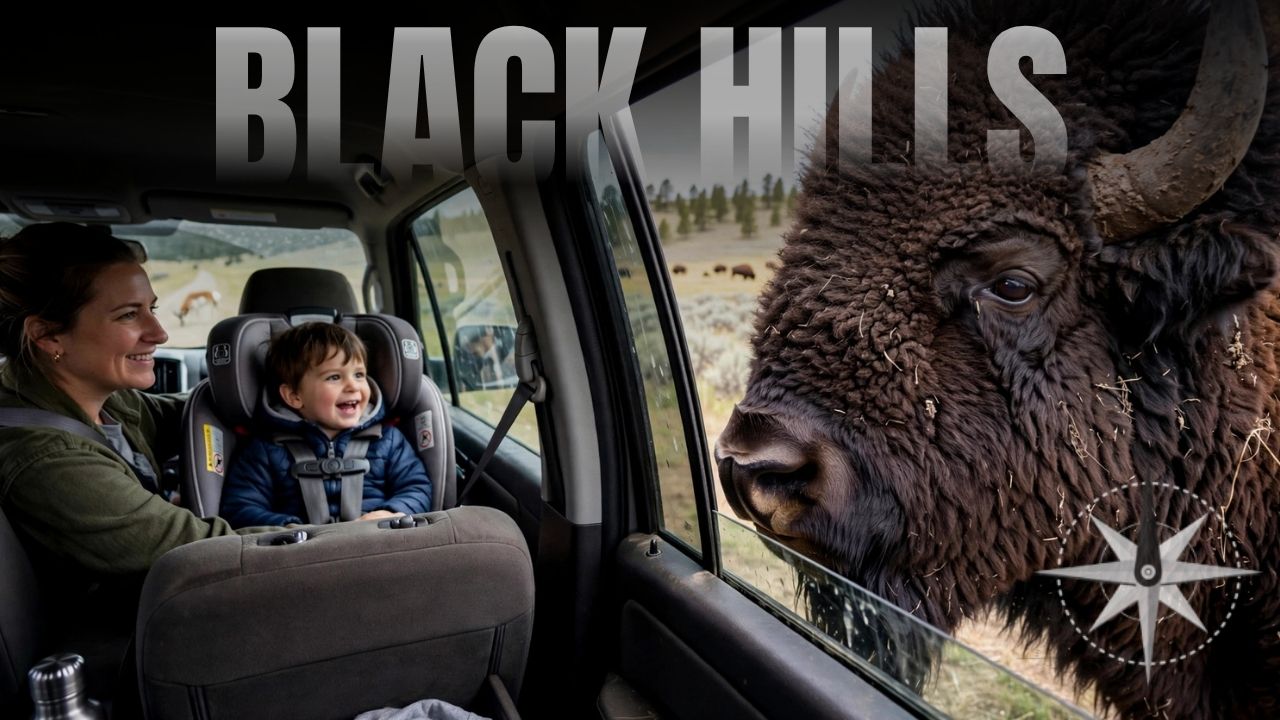
The Teton Range rises without foothills from the valley floor at Grand Teton. Yellowstone holds 10,000 geothermal features including Old Faithful, Grand Prismatic Spring, and the Grand Canyon of the Yellowstone. The two parks together represent the single greatest concentration of wildlife and geological wonder in the American national park system.
Meandering on a 330-mile loop that traverses through the Grand Teton and Yellowstone National Parks, this route begins and ends in Jackson Hole, Wyoming. This picturesque town is known for its whitewater rafting down the Snake River Canyon.
This one is for the real adventurers. Be sure to bring along your kayak and dirt bike. In this guide we have created, you can find more details that on what to expect on a Grand teton to yellowstone road trip.
Wildlife and nature enthusiasts are spoiled for choice. Attractions include the Mammoth Hot Springs, Lamar Valley (home to bears, wolves, bald eagles, and pronghorn), the Norris Geyser Basin (the world’s tallest active geyser), Colter Bay Village, and Jackson Lake Overlook, and many more.

Route 7: The Blue Ridge Parkway
Virginia and North Carolina: 469 miles
The most visited destination in the entire US National Park System can be found on this route. A two-lane road through the Blue Ridge Appalachian Mountains with no traffic lights, no commercial vehicles, and a 45mph speed limit. Craggy Gardens in bloom, Mabry Mill reflected in still water, and the descent into Great Smoky Mountains National Park at the southern end.
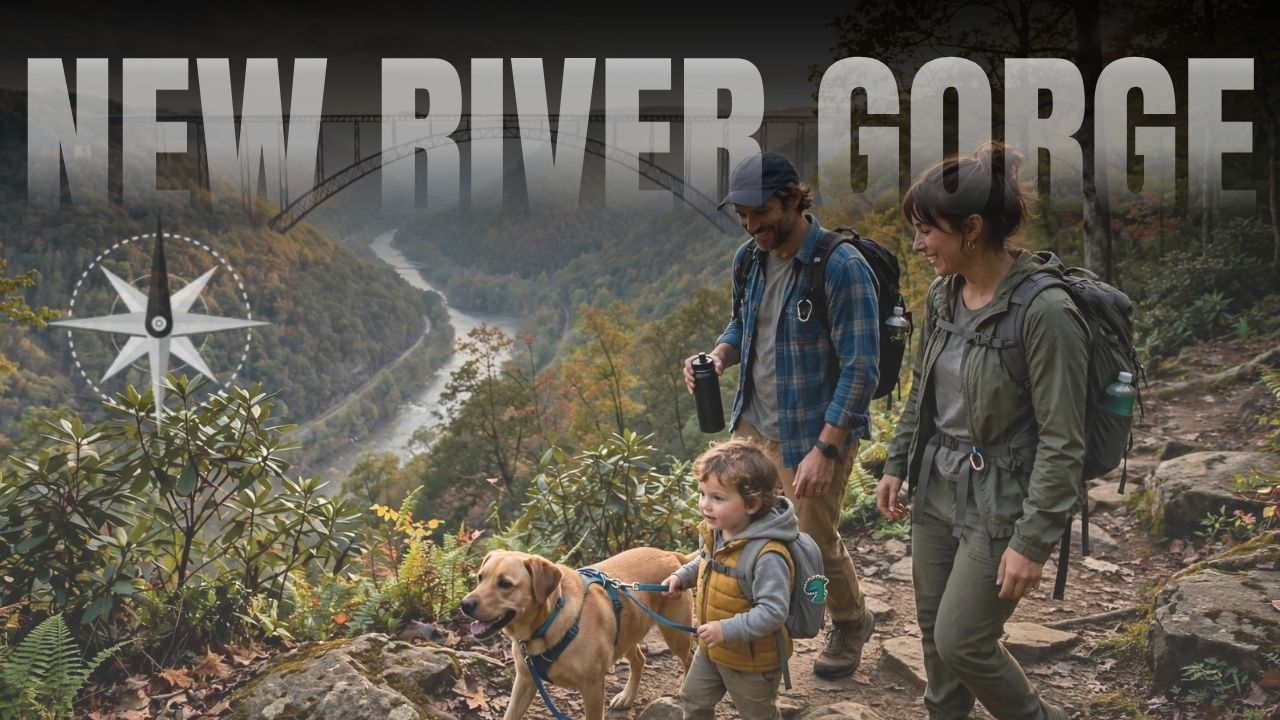
Comprising a mammoth stretch of 469 miles in the alpine wilderness of North Carolina and Virginia, the Blue Ridge Parkway is operated by the National Park Service. This meandering road has no major cities (only small towns like Asheville and Roanoke).
But not to panic.
There are countless picnic spots, Appalachian hiking trails, and scenic viewpoints. The Blue Ridge Parkway road trip is the perfect escape to a blissful wonderland of alpine serenity. And you can find out more in this our dedicated Blue Ridge Parkway Road Trip Guide: Here we cover the complete drive from Virginia to North Carolina.
Planning Notes Every Road Tripper Needs to Read First
Every guide in this series includes specific planning notes for the individual route. There are three things that apply across all seven routes that most generic road trip advice leaves out.
The first is the America the Beautiful annual pass. If your road trip includes any national park, national monument, or federal recreation site, this pass at $80 per vehicle covers all of them for 12 months. Five of the seven routes above include NPS sites as primary destinations. The pass is available at any NPS entrance gate or at recreation.gov.
The second is accommodation booking lead time.
The four most popular routes on this list Pacific Coast Highway, Grand Teton to Yellowstone, Route 66, and the Blue Ridge Parkway fill accommodation in the July and August peak season months in advance. We used the VRBO service for our lay overs. The services are amazing.
Book national park lodges 6 months out from a summer trip. The shoulder season window of May to June and September to October gives you the same landscapes with significantly more flexibility.
The road trip that goes wrong at the logistics level is not a travel story. It is a very expensive and stressful car problem. The preparation is what makes the freedom possible.
The third is the car preparation reality check. Most road trips fail at the logistics level rather than the inspiration level.
A tyre blowout on the Nevada stretch of Route 50 is a different problem from a tyre blowout on the Pacific Coast Highway. Check tyres, carry a spare, have breakdown cover that works across multiple states, and tell someone your itinerary before you leave. The open road is only romantic when the car is working.
Which of these seven routes is on your list and which one have you already driven?
Is there a route we missed that deserves to be on a list like this?
Drop your answer and your experience in the comments below.
FAQs
Which of the 7 routes is best for a first American road trip?
The Pacific Coast Highway from San Francisco to Los Angeles is the recommended starting point for first-time American road trippers. It is logistically manageable at 460 miles, the stops are well-spaced and well-documented, accommodation is available across every budget tier, and the combination of coastline, cultural towns, and natural landmarks delivers the broadest cross-section of what American road travel can offer in the shortest mileage.
Which route is best for families with young children?
The Grand Teton to Yellowstone loop is the strongest family route for children aged 4 to 12. The wildlife encounters at every stop are immediately engaging for young children without requiring long hikes or cultural context. The boardwalk infrastructure at Yellowstone’s thermal features is safe and accessible. The Jackson Hole base has family accommodation across all price points.
How do I link these routes into a multi-week grand tour?
The most natural multi-route itinerary connects the Pacific Coast Highway to Route 66 via Los Angeles, then continues east through the Southwest before turning north to Wyoming for the Grand Teton to Yellowstone loop. A 4-week itinerary covering these three routes gives you the Pacific, the historic heartland, and the mountain West in a sequence that follows the geographical and cultural logic of American expansion westward.
Research Sources and Recommended Backlink Resources
National Park Service (NPS) America’s National Parks
America the Beautiful Annual Pass (Recreation.gov)
Blue Ridge Parkway Foundation (official partner)
Route 66 Corridor Preservation Program (NPS)
Kenai Fjords National Park Alaska (NPS)
Grand Teton National Park (NPS)
Yellowstone National Park (NPS)
Great Basin National Park Nevada (NPS)
Great River Road (Experience Mississippi River)
America’s Byways Federal Highway Administration
Alaska Seward Highway Scenic Byway (AKDOT)
On the Road by Jack Kerouac (Wikipedia reference)
Whether you are traveling solo, with friends, or with your family, the Great American Road Trip is the perfect way to experience the heart and soul of America.






2 Responses
Hmm is anyone else experiencing problems with the pictures
on this blog loading? I’m trying to find out if its
a problem on my end or if it’s the blog. Any suggestions would be
greatly appreciated.
I’d take a quick look at that