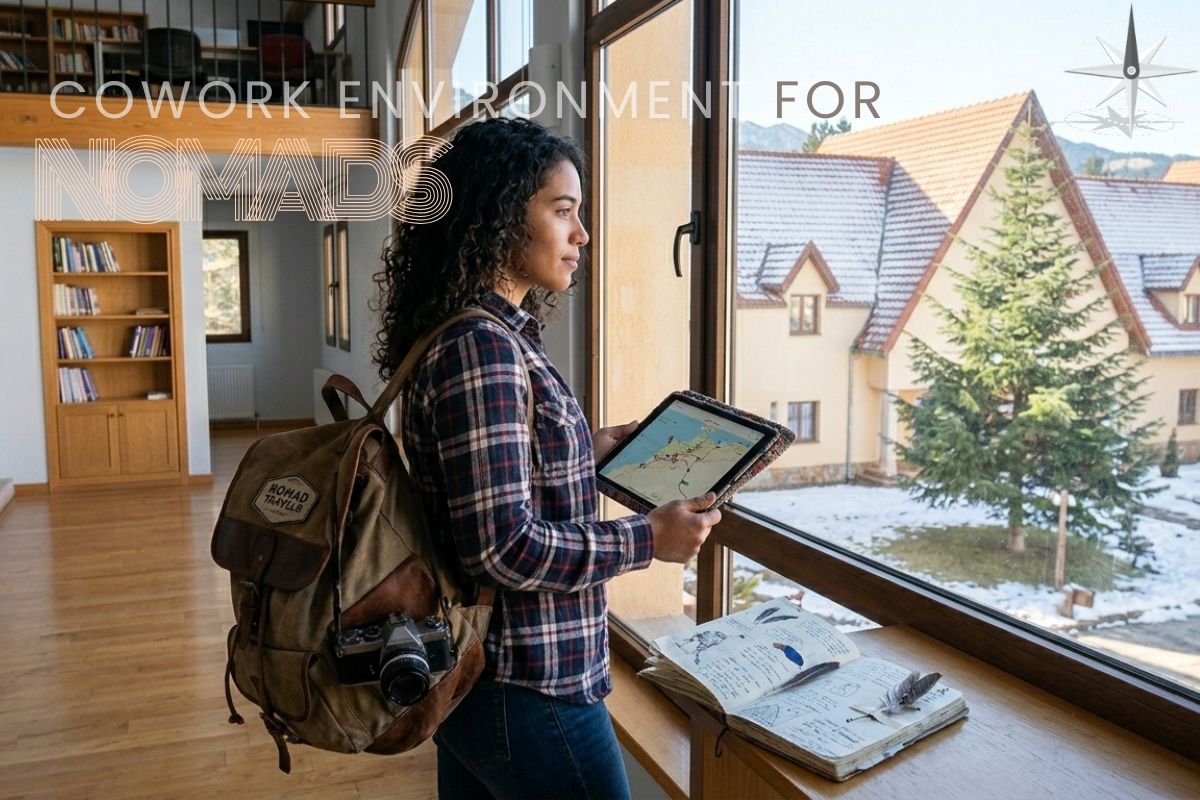
It’s 5:47 AM in a sun-drenched rental in Portugal. This is just one of the rewards of choosing a Work From Home Freelance lifestyle.
For once, your coffee is actually hot. Your daughter is still asleep, and outside, the streets are just beginning to wake up.
For most, this looks like a once-in-a-lifetime vacation. For you? It’s just Tuesday.
Here’s what got you here: Not “manifesting” or hobby blogs. A sustainable $3,000–$5,000 monthly income that works from anywhere.
No Instagram fantasies.
No “get rich quick” nonsense.
Just legitimate remote work from your VRBO, that bends around school pickups, sudden fevers, and that magical hour when toddlers finally nap.
You’re here because you want freedom without sacrificing financial security.
According to a 2025 work trends report,
“fully remote roles are now the most preferred option among working parents”
With 63% choosing to work remotely over hybrid or office-based roles.
Underscoring the strong demand for work models that better align with family life and caregiving responsibilities.
This is your roadmap to the 7 proven remote jobs you can start within 30–90 days using skills you already have.
No fluff. No false promises. Just a clear path to earning while exploring
How to Find Legit Remote Jobs Safely
Can we talk about the scammers for a second?
They’re everywhere.
Preying on moms who just want flexible work.
“Earn $5000 weekly with no experience!”
Sure, Jan. And I’m the Queen of England.
Finding remote work that actually fits a nomadic lifestyle takes some street smarts.
You need to know where to look, and, more importantly, what to avoid.
Here’s how to protect yourself:
Use trusted platforms.
Websites like Upwork,
Check reviews.
Read ratings.
If something feels off, it probably is.
Verify every single client.
Before you say yes to any project, do your homework.
Google them.
Check their website.
Look at their social media.
Legitimate businesses have a digital footprint.
Scammers? They disappear like smoke.
Trust your gut on “too good to be true” offers.
High income, zero experience, minimal work?
That’s not a job.
That’s a red flag wrapped in a scam.
Start small, always.
Test a client with one project before committing long-term.
Think of it as a trial run.
You’re interviewing them just as much as they’re interviewing you.
Network with other remote moms.
Join Facebook groups.
Find forums.
Connect with online communities of stay-at-home moms doing this life.
They share verified opportunities, warn about sketchy clients, and offer advice you won’t find on any job board.
One more thing, keep a separate email and payment account for remote work.
Protect your personal information like you’d protect your kid at a playground.
Vigilant.
Intentional.
Smart.
Getting Paid Across Borders: 2026 Payment Solutions
Money needs to move as freely as you do.
Here’s what actually works for nomadic moms in 2026:
Wise (formerly TransferWise) – The go-to for most digital nomads.
Hold 40+ currencies in one account. Real exchange rates, not bank markup. Fees average 0.35-0.65% for transfers. Get local bank details for USD, EUR, GBP, clients pay you like you’re local, even when you’re not.
Best for: Freelancers with international clients who need multi-currency flexibility.
Payoneer – Strong for platform payments.
Direct integration with Upwork,
Best for: Moms earning primarily through freelance platforms.
Stripe Atlas – For the business-minded.
Stripe now offers Atlas accounts that let you form a US LLC and access US banking remotely—even as a non-resident. Processing fees are standard 2.9% + $0.30, but you get instant credibility with US clients and simplified tax documentation.
Best for: Moms building actual businesses, not just freelancing.
Cryptocurrency options – No longer fringe.
USDC (stablecoin) payments are mainstream in 2026. Instant transfers, minimal fees (often under $1), no bank intermediaries. Platforms like Bitwage let clients pay in traditional currency while you receive in crypto—or vice versa.
Best for: Tech-savvy moms working with crypto-friendly clients or wanting to avoid bank restrictions.
The Smart Setup
Don’t rely on one payment method.
Most successful nomadic moms use:
- Wise for day-to-day multi-currency needs
- PayPal as backup (yes, fees are high, but everyone has it)
- One crypto wallet for clients who prefer it or emergency liquidity
Pro tip: Always have two withdrawal methods. Banks freeze accounts when they see “suspicious” activity (aka you logging in from different countries).
Being locked out of your money in a foreign country with kids? Nightmare fuel.
Test small transfers before big ones. Know the fees. Read the fine print on holds and limits.
Your payment infrastructure is as important as your wifi.
Don’t learn this the hard way.
Top Career Paths For Moms Who Want a Flexible Nomadic Lifestyle
Not every remote job works for nomadic moms.
Some require you to be available during specific hours (hello, time zones from hell).
Others need you on video calls all day.
Those don’t fit when you’re chasing a three-year-old through a Lisbon market or dealing with spotty WiFi in a Bali guesthouse.
The best remote jobs for this lifestyle?
They’re location-independent, flexible with hours, and skills-based rather than clock-punching.
The biggest benefit is control.
You decide when to work.
How much to take on.
Where you wake up!
For families who move between countries or cities, remote work eliminates that stomach-dropping stress of job hunting every time you relocate.
One income stream.
Multiple addresses.
Just real jobs that real moms do while homeschooling, traveling, or keeping tiny humans alive.
But before diving into specific jobs, understand that there’s a difference between freelancing and building a sustainable remote freelance business that generates consistent income from anywhere. The jobs in this guide can become stepping stones toward that bigger vision.
So, how do moms do it?
Let’s get into it.”

1. Freelance Writing and Content Creation
Freelance writing might be the most flexible remote job out there for moms.
If you’re new to this world, understanding the foundations of freelancing as a
Write at 5 AM before the kids wake?
Do it.
During naptime?
Perfect.
At 11 PM when everyone’s finally asleep?
Whatever works.
All you need is a laptop, internet, and the ability to think clearly (okay, that last one’s challenging some days).
Many moms start simplblog posts, website content, product descriptions.
Nothing fancy.
Over time, some move into email campaigns, comprehensive guides, or long-form articles that pay significantly better.
Why it works for nomadic moms:
- Deadlines are usually flexible
- Work from literally any country
- No meetings required (in most cases)
- Build a portfolio that travels with you
Things to consider:
Income can be uneven at first.
Some months are feast, others are famine.
You need to pitch clients or constantly apply for work.
And when you are worried about writing well?
It takes practice. Lots of it.
Here’s a simple starting point: pick one topic you know inside and out.
Parenting. Travel. Health. Whatever.
Write three sample pieces.
Apply to small websites or businesses.
Experience builds both confidence and income, but you have to start somewhere.
2. Virtual Assistant Jobs
Virtual assistants keep businesses running smoothly from behind the scenes.
Email management.
Scheduling.
Customer replies.
Research.
Data entry.
Nothing glamorous, but steady.
You don’t need a fancy degree to start—just organization skills and reliability.
Many stay-at-home moms gravitate toward VA work because tasks are clear and structured.
You know exactly what needs doing, how long it takes, and what success looks like.
No guessing games.
Common virtual assistant tasks:
- Managing inboxes (often drowning in unread messages)
- Booking appointments
- Updating documents or spreadsheets
- Responding to customer questions
- Light social media management
Pros:
Steady monthly income.
Skills are genuinely easy to learn.
High demand across nearly every industry.
Cons:
Some clients expect set hours, which can be tricky with kids.
Time zones can complicate scheduling.
Not every client understands “flexible.”
This job is ideal if you love order, lists, and helping others stay organized.
It’s also a stepping stone—many VAs later move into higher-paying project management or consulting roles.

3. Online Teaching and Tutoring
Do you light up when explaining things to people?
Online tutoring might be your sweet spot.
Many platforms let you teach English, math, science, or other subjects from anywhere with decent WiFi.
Some moms tutor privately through video calls, setting their own rates and schedules.
This works best if you enjoy structured sessions and actually interacting with people.
Lessons typically run 30 to 60 minutes, making them easy to squeeze between family commitments.
What you’ll need:
- A quiet space during lessons
- Stable internet connection
- Clear communication skills
- Patience (lots of it)
Benefits:
Predictable schedule.
Hourly pay that’s fairly consistent.
A genuine sense of purpose and connection with students.
Some platforms require teaching certifications.
Others accept experience or simple training courses.
If you like helping people learn and grow, this can be incredibly rewarding work.



4. Graphic Design and Creative Services
Creative moms often thrive in graphic design.
Social media visuals.
Simple branding work.
Layouts that make information beautiful.
If you love colors, fonts, and visual storytelling, this path might call your name.
Design work is project-based—you agree on a task, complete it, deliver it.
This gives you total control over your workload and timing.
Take on three projects this week? Great.
Need next week off for family time? Also great.
Examples of creative services:
- Social media graphics
- Simple logos and branding
- Presentation design
- Printable worksheets or planners
- Pinterest pins (yes, people pay for this)
Advantages:
High demand.
You can charge per project rather than hourly.
Work is completely portable.
Challenges:
You’ll need to learn design tools like Canva (easy) or Adobe Creative Suite (steeper learning curve).
Client feedback sometimes takes forever.
Revisions can multiply.
Many moms learn design through YouTube tutorials and online courses.
Start with a few practice projects, build a small portfolio, and watch the work opportunities grow.
5. Customer Support and Community Management
Some companies hire remote customer support agents to answer chats, emails, or manage online communities.
This role suits moms who are patient, friendly, and naturally clear communicators.
You’re the person who solves problems, answers questions, and keeps digital spaces welcoming.
Customer support roles may require specific shifts, which can be limiting.
But many companies now offer flexible or part-time options.
Community managers often work asynchronously—responding when needed rather than being chained to a desk.
Key responsibilities:
- Answering questions (sometimes the same ones repeatedly)
- Solving simple problems
- Keeping online spaces friendly and productive
- Documenting issues or feedback
Why moms choose this work:
Clear tasks with defined outcomes.
No selling required.
Potential for long-term contracts that provide stability.
Best fit?
If you’re comfortable with communication and basic tech tools, this can be surprisingly fulfilling work.

6. Selling Digital Products and Services
What if you could build something once and sell it repeatedly?
That’s the promise of digital products—ebooks, planners, templates, online courses.
Or services like coaching and consulting.
The setup takes time and effort upfront, but the flexibility later can be extraordinary.
You choose when to create.
How to sell.
What to charge.
You’re in control.
Popular digital products:
- Budget planners
- Parenting guides (moms teaching moms)
- Travel checklists
- Skill-based mini courses
- Templates for everything
Pros:
No fixed hours whatsoever.
Scales over time as your audience grows.
Fully location-independent—sell while you sleep, while you travel, while you live.
Cons:
Income is slow at the start.
Sometimes painfully slow.
Requires marketing skills or willingness to learn.
You need patience and persistence.
This path suits moms who enjoy teaching, writing, or sharing systems that genuinely worked for them.
If you’ve figured something out—meal planning, budget travel, homeschooling—someone else needs your knowledge.
Skills to Build for Long-Term Remote Success
Here’s the truth: the job matters, but the skills matter more.
Certain abilities make remote work easier regardless of what you’re doing.
These skills help you adapt as your family changes, as your travel plans shift, as life throws curveballs.
Critical skills:
- Time management (protecting focus time when kids are chaos)
- Clear communication (over-communicate in remote work—always)
- Basic tech knowledge (you don’t need to be a developer, just comfortable)
- Problem-solving (when plans fall apart, because they will)
Learning to plan your day, guard your focus time, and communicate clearly with clients is just as valuable as the technical work itself.
And here’s something nobody tells you: routines bring freedom, not limitations.
When your work has structure, everything else becomes easier.
Working With AI, Not Against It: The Reality
Let’s address the elephant in the room.
AI is changing remote work faster than most people realize.
ChatGPT writes articles. Jasper creates ad copies. Midjourney designs graphics.
So why would anyone hire a mom working from a beach in Bali when AI can do it cheaper?
Here’s what the panic merchants won’t tell you:
AI doesn’t replace moms who understand people.
It replaces tasks, not relationships.
The remote jobs thriving in 2026 aren’t the ones that can be automated—they’re the ones that require human judgment, empathy, and strategic thinking.
AI-Resistant Skills That Actually Matter
1. Relationship management
Clients don’t hire AI to understand their brand voice, anticipate their needs, or manage stakeholder expectations.
They hire you.
Virtual assistants who truly understand their client’s preferences are irreplaceable.
Writers who capture a brand’s unique personality can’t be duplicated by prompts.
2. Creative strategy
AI can generate 50 headline options in seconds.
But it can’t tell you which one will resonate with tired moms scrolling Instagram at 11 PM.
That’s human intuition.
Strategic thinking—knowing why something works, not just what works—is your competitive advantage.
3. Complex problem-solving
When a client’s campaign isn’t converting, AI can’t diagnose the underlying issue.
When family logistics clash with work deadlines, ChatGPT can’t negotiate your toddler’s nap schedule.
You can.
How to Leverage AI (Instead of Competing With It)
The moms earning $5,000+ monthly in 2026 aren’t fighting AI.
They’re using it as their assistant.
Smart ways to use AI:
- Research faster – Use Claude to summarize articles, compile data, or generate initial outlines
- Overcome writer’s block – Let ChatGPT draft the skeleton, then add your voice and expertise
- Automate repetitive tasks – Use AI for email templates, social media scheduling, basic graphics
- Learn new skills quickly – Ask AI to explain concepts, create practice exercises, or troubleshoot problems
Here’s the formula that works:
AI handles the grunt work.
You handle the strategy, relationships, and refinement.
A writer using AI to research and outline can take on 3x more clients.
A VA using AI for email drafts can manage more accounts without working more hours.
A designer using AI to generate concepts can focus on client relationships and high-level creative direction.
The bottom line?
AI isn’t your competition.
It’s your unfair advantage. if you know how to use it.
The moms who treat AI as a tool (like a dishwasher or laptop) will thrive.
The ones who ignore it entirely will struggle.
The ones who fear it will be left behind.
Choose wisely.

Managing Work, Kids, and Travel Together
Let’s be honest—living a nomadic life with children isn’t always Instagram-pretty.
Some days are magical.
Your kids play happily while you finish a project overlooking the ocean.
Other days, your toddler has a meltdown in a foreign grocery store, your WiFi dies during a client call, and you question every decision that led you here.
It’s possible. It’s just not always easy.
Helpful strategies:
Work during quiet hours.
Early morning or late night might become your most productive times.
Embrace it. Mastering remote work time management while balancing adventure is crucial as you’ll need systems that protect your focus time without sacrificing family experiences.
Choose family-friendly locations.
Research before you book.
Are there parks?
Safe neighborhoods?
Other families?
Set clear work boundaries.
Your kids need to understand (age-appropriately) when you’re working.
A sign on the door.
Headphones as a signal.
Whatever works.
Keep backup plans for internet.
Mobile hotspots are essential. However, one of the smartest investments is getting an eSIM like Airalo before you even land.
No hunting for SIM cards with cranky kids in tow, no wifi anxiety at the airport. You have data the second the plane touches down. This is critical when you need to message a client or access work documents during transitions.
Cafes with WiFi. Co-working day passes. Always have Plan B
Some days will feel messy and impossible.
Others will feel peaceful and deeply rewarding.
The goal isn’t perfection—it’s progress.
Keep moving forward, even when it’s hard.
Budgeting and Planning for a Nomadic Family Lifestyle
A flexible nomadic lifestyle works beautifully… when finances are managed carefully.
Traveling with children adds expenses you didn’t anticipate.
Sudden doctor visits.
Extra snacks because travel days are long.
Accommodations that need multiple beds or rooms.
Planning ahead isn’t optional—it’s essential.
Tips for managing money on the move:
Track every expense.
Use apps like YNAB or simple spreadsheets.
Know exactly where money goes—travel, housing, food, work costs, all of it.
Find family-friendly accommodations.
Rentals with kitchens save hundreds on restaurant meals.
Look for long-term stay discounts on Vacation Rentals By Owners. If you’re considering where to start, Southeast Asian destinations offer the best value for
Plan for healthcare.
Research local medical facilities before arriving anywhere.
Understand insurance coverage.
Keep vaccination records accessible.
Prioritize stable internet.
Read reviews specifically mentioning WiFi.
Message hosts to confirm.
Your income depends on connectivity—don’t compromise here.
Small planning steps dramatically reduce stress, keep work consistent, and ensure your family actually enjoys the adventure rather than just surviving it.
Building a Support Network While Traveling
Remote work plus constant travel can feel isolating.
You’re balancing kids, work, new environments, cultural differences.
Without support, it’s exhausting.
Building a network isn’t luxury. It could be your lifeline.
How to create support systems:
- Join online communities for nomadic families and remote-working moms
- Connect with local parents through parks, libraries, playgroups, family events
- Use co-working spaces or cafes to meet other remote workers
- Stay in touch with friends and family through video calls (don’t underestimate this)
A support network reduces isolation, provides insider tips for local living, and can even open new job opportunities through word-of-mouth.
It also helps your children socialize and adapt to constantly changing environments.
You can’t do this alone.
Nobody can.
Find your Nomadic clan.
Conclusion
Remote work gives stay-at-home moms something precious: the chance to earn, grow, and explore without sacrificing family time.
With the right job, proper planning, and genuine support networks, a flexible nomadic lifestyle becomes not just possible but sustainable and deeply fulfilling.
Start small.
Learn consistently.
Choose work that respects your life instead of consuming it.
Freedom doesn’t arrive overnight.
It grows step by step, decision by decision, small win by small win.
And every single step?
It counts.
Now—are you ready to take the first one?