
Your family’s first day climbing outside sets the tone for every trip after it. A good first day makes kids want to come back. A long walk, a scary edge or a cold, shady wall can put them off for a year.
This guide is the step-by-step plan. For the criteria we use to judge any crag, read what makes a climbing crag kid-friendly.
Step 1: Start in the gym
Climbing gyms are the easiest place for kids to learn the basics. They can boulder close to the ground, try a rope with a trained belayer, and get used to heights in a controlled space.
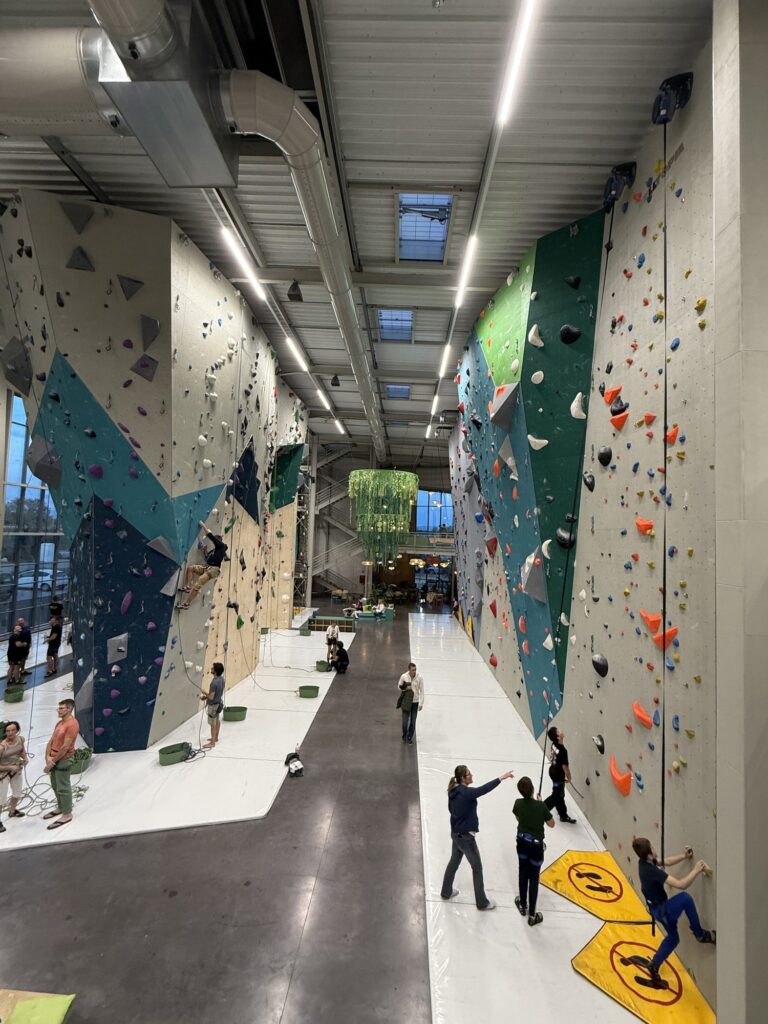
The Alpine Institute suggests starting with bouldering, then roped climbing, before moving outside. A few gym sessions also show you how your children react to height, falling and waiting their turn.
Step 2: Make sure an adult has the skills
Outdoor climbing needs skills the gym does not teach: building top-rope anchors, judging rock quality and managing a group at the base. If no adult in the family has done this before, take a course or book a guide for the first outing. A guide can also choose the crag for you, which removes a lot of guesswork.
Step 3: Shortlist nearby areas
Start close to home. A short drive means you can leave early if the day goes badly, and try again next weekend.
Use a local guidebook, Mountain Project, your climbing gym and local climbing groups to make a shortlist. Ask other climbing parents where they take their kids. They usually know the answer immediately.
Step 4: Check each area against the family test
For each place on your list, check the basics:
- Approach under about 15 minutes on an easy trail.
- Flat, roomy ground at the base, away from drops.
- Short, easy, low-angled routes with safe top-rope access.
- Shade at the time of day you plan to climb.
- Few other hazards, such as roads or water near the base.
The full list, with the reasons behind each point, is in what makes a climbing crag kid-friendly. Cross off anything that fails the approach or the base. Those two decide more family days than the routes.
Step 5: Scout it without the kids
If you can, visit the crag once on your own or with another adult. Walk the approach. Find the spot where the kids will sit. Check how you will set the anchors. Look at the toilet situation.
Twenty minutes of scouting answers questions no guidebook can. It also means you arrive on the family day already knowing the plan.
Step 6: Pick the right day
Choose a day with mild weather and low crowds. Midweek or early mornings are usually quieter. Avoid holiday weekends at popular areas.
Check access and closures before you leave. Some crags close for nesting birds, fire risk or land management reasons.
Step 7: Plan a short day
Plan for two or three hours at the rock, not a full day. Many families find that kids enjoy a short, successful outing far more than a long one.
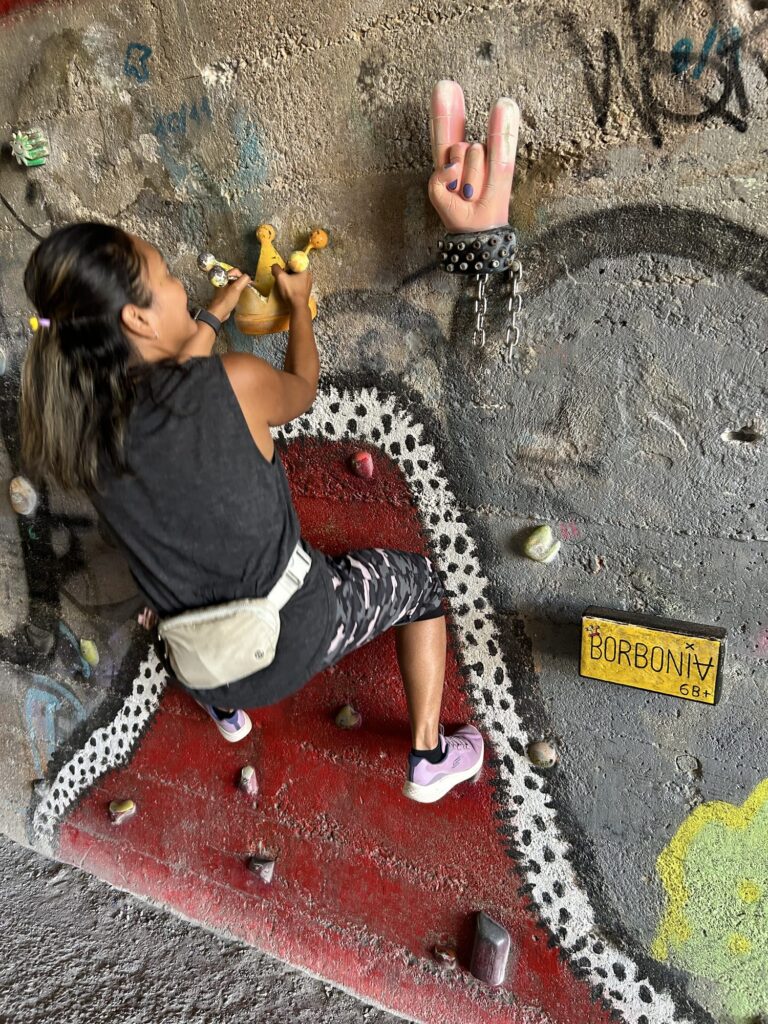
Start small. The Alpine Institute suggests letting young children climb only a short way up at first and building height over time. Let them come down when they want to. Let them swing on the rope. Make it fun first.
Step 8: Pack well and bring a plan B
Bring more food, water and layers than you think you need, as the Access Fund advises. Our family crag day packing list covers the details. Make sure each child has a fitting harness and a climbing helmet. See family climbing gear.
Have a backup plan nearby: a playground, a stream, a short walk or an ice cream stop. If the kids are done by 11 a.m., the day can still end well.
Step 9: Leave them wanting more
End the day while everyone is still happy. On the drive home, ask the kids what they liked best. Their answers tell you where to go next time.
Our kids started early. Claire came to her first crag at two weeks old, in Golden Valley, Arizona. Sebastien was ten days old at Red Rock Canyon, Nevada. Both slept at the base on an oversized dog bed from a pet store. With babies that young, a flat base and a short day matter far more than the routes.
Ready to find a place?
Browse our kid-friendly climbing guides for crags we have assessed for families, then use the steps above to plan your first day.