Barbary Macaques, and Zero Crowds
Climbing Near Ifrane Morocco: The Complete Long-Stay Guide for Nomad Families
Altitude Base, Cedar Forest, Climbing & Mountain Life
Nobody told me Ifrane would work like this. I found it the way most useful things in Morocco get found: by reading between the lines of what the guidebooks skip. Most climbing content about Morocco points you straight to Todra Gorge, Tafraoute, or Taghia.
Those are all legitimate destinations and we cover each of them in detail across this site.
But there is a fourth climbing context in Morocco that nobody is writing about in English. That gap is exactly where Nomadic Clan lives.
This guide covers everything a nomad family needs to know about climbing near Ifrane, from the cedar boulder sectors to the Jbel Hyan ridge, with honest signal and logistics data included.
Basic detail summary:
Ifrane sits at 1,650 metres in the Middle Atlas, roughly 60 kilometres south of Fes. The French built it in 1928 as their own mountain escape from the lowland heat, and the alpine architecture they left behind gives it the strange feeling of a Bavarian village that got lost and ended up in Africa.
As a family, you can actually make Ifrane your base and have an amazing time in Fes for various outdoor adventures.
What those guidebooks miss is the geology underneath the pretty streets: the entire Middle Atlas is a series of limestone plateaux studded with volcanic outcrops and cliff lines that have seen almost no systematic climbing development.
The Temperature Argument That Changes Everything
Before we talk about the rock, I want to make the case that most nomad families are missing. Marrakech in July averages 38°C. Agadir sits at around 27°C but with Atlantic humidity layered on top.
Essaouira is windswept enough to make outdoor work unpleasant for much of the summer. Ifrane, at 1,650 metres, averages 22°C in July.
That is not a detail. It is a structural advantage.
The altitude physics are simple. For every 1,000 metres of elevation gain, air temperature drops by roughly 6.5°C. Ifrane sits high enough above the Moroccan interior plains to sit in a completely different thermal world. In practical terms this means you can climb in the morning without a pre-dawn alpine start.
Your laptop does not overheat on an outdoor terrace.
Kids can play outside at noon without heat exhaustion risk. Your dog has huge opportunity to run in the forest between 8am and 3pm without you worrying.
If you are travelling to Ifrane with a dog, our Ifrane dog-friendly trail guide covers the full cedar clearing loop, the off-leash protocol, and the Fes vet network you need before you arrive.
“Most nomad families avoid Morocco in July and August entirely. Ifrane is the location that makes the whole summer workable.”
As a nomad base Morocco summer options are almost always coastal or European. Ifrane is the one inland exception that changes that calculation entirely.
If your decision is being driven by temperature data and family productivity rather than the climbing angle, our dedicated guide to Ifrane as a Morocco summer base for families breaks the month-by-month numbers down to the hour and documents what a two-laptop household in August actually costs to run.
The July and August window matters specifically for nomad families because it coincides with school break season. World schooling families and those on international school calendars are at their most mobile between June and September. Ifrane captures that window in a way that no other Moroccan mountain base currently does, because nobody else is writing about it.
Rock Climbing in Ifrane and the Middle Atlas
I want to be precise here because precision is the entire point of this site. Ifrane is not Todra. There is no published guidebook, no bolted sport wall, and no chalk-covered tick marks on the popular lines.
What exists is this: the Middle Atlas limestone plateaux between Ifrane and Azrou have natural cliff edges and boulder, formed partly by volcanic activity over centuries.
The highest point in the province, Jbel Hyan at 2,409 metres, has genuine ridge scrambles and multi-pitch potential on its upper rock bands.
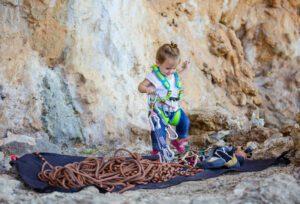
Closer to town, in the forests between Ifrane and the Cèdre Gouraud, there are standalone basalt boulders sitting in cedar clearings where you can work movement problems in the F3 to F5 range without a rope, without crowds, and without paying to park.
These are not in any database. They are exactly the kind of honest, exploratory beta that the High-Complexity Nomad family actually needs.
If you arrive expecting Todra-level infrastructure, you will be disappointed. If you arrive understanding that you are on the frontier edge of an undeveloped Middle Atlas climbing scene, you will leave having climbed routes that almost no other family has touched in the past decade.
For families researching Morocco climbing with kids, the table below is the fastest way to assess whether Ifrane matches your logistics before you commit to the drive from Fes.
If you want to experience what life in Ifrane looks like beyond the crags, our Ifrane family vacation guide covers the town from a non-climbing angle. Here you have a glimpse of its restaurants, lakes and seasonal activities
The Family Logistics Snapshot
| Category | Detail | Nomadic Clan Rating |
| Altitude | 1,650m town / 2,409m Jbel Hyan | Cool summers, cold Jan-Feb |
| Summer Temperature (July) | 22°C average high | The ONLY cool Morocco base in peak summer |
| Distance from Fes (FEZ airport) | 60 km, approx 1 hr | Grand taxi: 80-100 MAD per person |
| Distance from Meknes | 65 km, approx 1 hr | Day-trip easy from Ifrane |
| Best Season for Nomad Stays | Mar-Jun, Sep-Nov | Spring and autumn are ideal. Summer unique advantage. |
| Winter Option | Dec-Feb (Mischliffen ski) | Only Morocco mountain ski base for families |
| Accommodation Cost | 400-600 MAD/night guesthouse | Long-stay apartment: 2,500-4,000 MAD/month |
| Nearest International School | Fes, 60 km | American School of Fes, French Lycée options |
| English Community | Al Akhawayn University | Unusual in rural Morocco — significant advantage |
| 4G Signal (Orange Morocco) | 3-4 bars in town + cedar area | Reliable for video calls |
| Nearest English-Speaking Vet | Fes, 60 km (Clinique Al Farabi) | Plan emergency contact in advance |
| Dog Off-Leash Territory | Cedar forest, very low foot traffic | Best in Morocco — morning sessions before 9am |
| Climbing Style Available | Bouldering, scrambling, multi-pitch | Zero competition for English climbing beta |
| Ski Resort | Mischliffen / Jbel Hibri | Family-friendly, gentle slopes, beginner ideal |
Middle Atlas bouldering is largely uncharted, and the four areas below represent the most accessible starting points for families arriving without a local guide
Crag Breakdown by Area
| Area | Rock Type | Style | Grade Range | Family Access | Dog OK |
| Cedar Gouraud Boulders | Basalt | Bouldering | F2 to F5 | Flat clearing / 10 min walk | Yes |
| Azrou Escarpment | Limestone | Scrambling / top-rope potential | F3 to F5+ | Road access / 15 min approach | Yes |
| Jbel Hyan Ridge | Limestone | Multi-pitch scramble | Grade III to IV | Not suitable under-8s | Lead on short leads |
| Dayet Aoua Cliffs | Volcanic basalt | Single pitch exploration | Ungraded / proj lines | Good flat lakeside base | Yes |
The Barbary Macaque
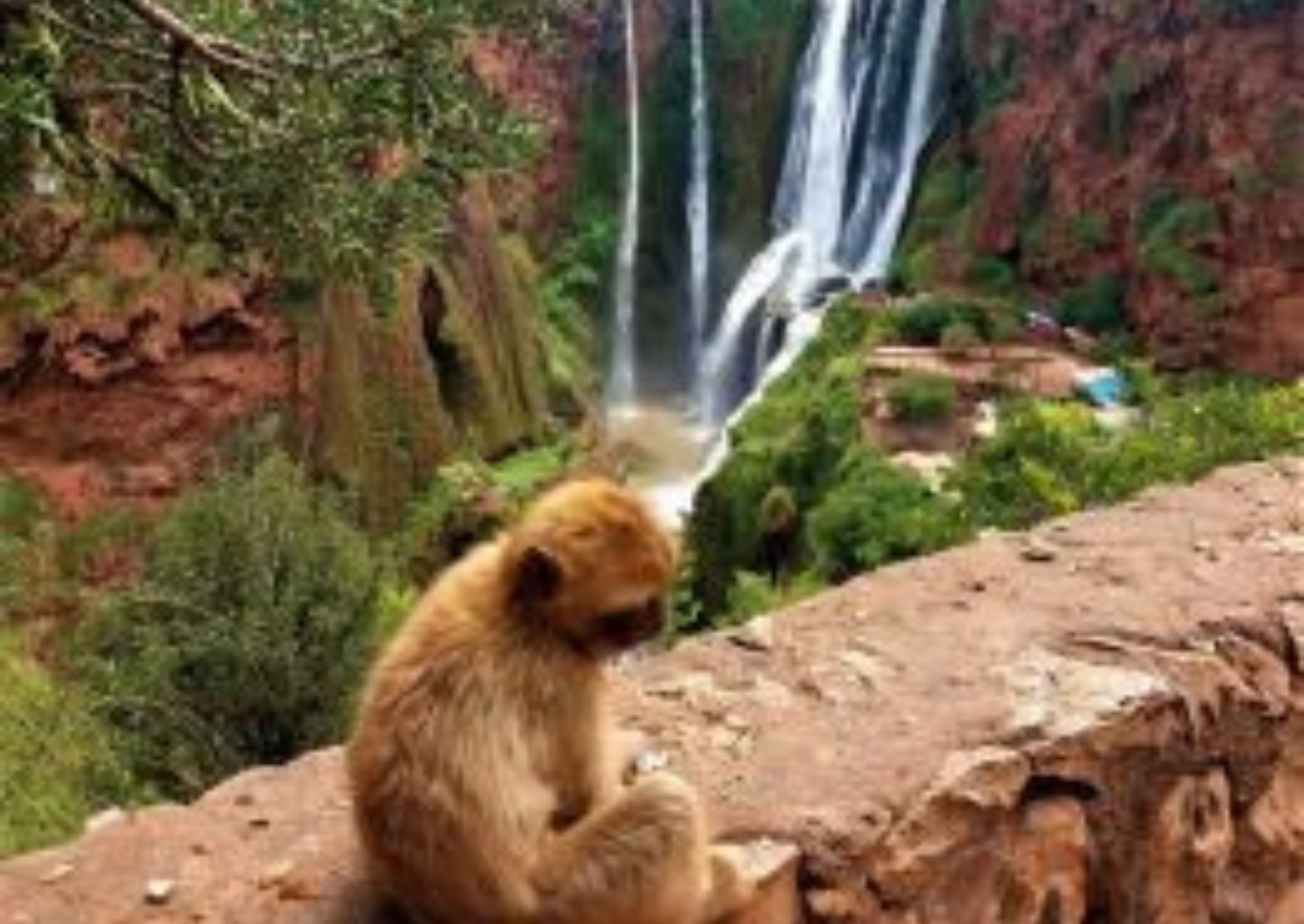
My daughter was six years old when she first sat three metres from a Barbary macaque in the cedar clearing below the main boulder block. The macaque was eating something from the ground. My daughter was having a biscuit. They looked at each other for about four minutes and then both went back to what they were doing.
That encounter was the tipping point. We came to Ifrane for the basalt, but we ended up staying for the ecosystem. If you want the full breakdown of the trails and lake circuits that eventually pulled us away from the crags, see our Cedar Forest & Macaque Trail Guide Trailing Ifrane with kids
I will tell for certain that these among many other memories from our Morocco expedition captures what this life actually is.
The Barbary macaque is Morocco’s only native primate and is classified as endangered.
The cedar forests of the Middle Atlas between Ifrane and Azrou are their primary habitat in the country. The Cèdre Gouraud area holds one of the highest densities. The interaction rules are straightforward: do not feed, do not touch, and do not approach.
Stand still and wait.
Atlas Mountains is rich in ecology. To learn its conservation story, and what responsible wildlife interaction looks like in practice, check out this piece on our experience encountering the Barbary macaques.
For families with children who have outgrown standard wildlife tourism, this is the kind of experience that doubles as a living curriculum in ecology, conservation, and patience.
For world schooling families specifically, the entire Middle Atlas ecosystem around Ifrane is extraordinary classroom material. The Ifrane National Park covers more than 500 square kilometres and contains 37 mammal species, 140 bird species, and more than 30 species of reptiles and amphibians.
The three mountain lakes to the north of town, Dayet Aoua, Dayet Hachlaf and Dayet Ifrah, are each accessible within a 30-minute drive for half-day family circuits.
When to Come Climbing at Climbing Ifrane Morocco
Most Morocco climbing content suggests October to April and avoids the rest. At Ifrane that formula does not apply, and understanding why is the key to using the location correctly.
Ifrane Seasonal Climbing Guide
| Season | Months | Avg Temp | Climbing Reality |
| Spring | March to May | 12 to 20°C | Best all-round season. Wildflowers in cedar forest. All four areas climbable. Macaques very active. School term means weekdays quiet at crags. |
| Summer | June to August | 19 to 24°C | Ifrane’s unique advantage. The only Morocco climbing base viable in peak heat. Cedar boulders climbable all day. Jbel Hyan ridge comfortable before noon. |
| Autumn | September to November | 10 to 20°C | Excellent. Apple harvest season at La Pommeraie. Azrou souk in full swing. Rock conditions perfect. Best photography light of the year. |
| Winter | December to February | 2 to 9°C | Snow above 1,800m. Cedar boulders may be wet. Mischliffen ski resort opens. Town cosy with wood stoves. Not recommended for climbing above the road. |
If your family climbing window falls in December through February, the climbing season closes just above the road. However, the base does not.
Mischliffen ski resort opens 20 minutes from town and turns Ifrane into the only mountain ski base in Morocco where you can keep your remote work schedule running. We documented eight days there in January with our kids and a dog in our Mischliffen family ski guide. You can check it out for more specific information.
The summer window deserves special emphasis. Between June and August, Ifrane is the only base in Morocco where a family can climb comfortably in the morning, work productively in the afternoon without air conditioning costs, and let the children and dog spend time outdoors without heat management becoming a full-time job. I have spent a July in Marrakech. I have spent a July in Ifrane.
The difference is not small.
Autumn delivers the best photography light of the year in the Middle Atlas. If you are thinking about upgrading your travel camera setup before this trip, the cedar forest at golden hour will make you glad you did.



Connectivity and the Work-From-Crag Reality in the Middle Atlas
This is the section I always write for myself, from six months ago, standing in a car park somewhere wondering if I had enough signal for a call.
Ifrane town holds 4G LTE on Orange Morocco and Inwi, consistent enough for video calls without a hotspot backup. At the Cedar Gouraud boulder area, I held 3 to 4 bars on Orange throughout a two-hour session. At the Azrou escarpment, 10 kilometres from town, signal drops to 2 bars at the base and recovers at height. The Jbel Hyan ridge carries no reliable signal above 2,200 metres. Plan that day accordingly: it is a no-call day and needs to be scheduled as one.
Al Akhawayn University is based in Ifrane and its campus has publicly accessible Wi-Fi zones near the main gate. When I tested it on a Tuesday morning in April, the speeds were higher than most coworking spaces I have sat in across Marrakech. If you time your arrival at the cedar boulder area for 7am and climb through until 11am, you are back in town for a noon call with time to spare. That is the Ifrane climbing day schedule. It works.
CONNECTIVITY NOTE: Orange Morocco is the carrier to use for crag coverage in the Middle Atlas. Inwi performs better on price in city centres but loses ground outside town. Carry a 20,000 mAh battery pack for any day involving a call from the crag parking area.
How to Use Ifrane as a Base: The 48-Hour Setup
Arrive via Fes. Fly into Fes Saiss International Airport, code FEZ. Grand taxis run the route to Ifrane for about 80 to 100 MAD per person and take roughly one hour on the N8 road south through the cedar forest. The drive itself is a preview of everything you came for.
Accommodation for families
Guesthouses in town run at 400 to 600 MAD per night for a family room. The Hôtel Chamonix on the main avenue is clean, central, and takes dogs on advance request if you email in French.
Well, Guess what?
I have something for you.
Do you know that you can check Hotel current availability and rates before you arrive from the comfort of your home? Now you do. So check it out.

For a stay longer than two weeks, apartments in the residential western quarter come in at 2,500 to 4,000 MAD per month, negotiated through the Al Akhawayn expat Facebook group rather than any formal agency.
Grocery logistics: the Marjane-affiliated supermarket on the southern edge of town handles basics. For bulk produce shopping at source prices, the Tuesday souk at Azrou, 17 kilometres away, is one of the most authentic weekly markets in the Middle Atlas. For Western staples like pasta, cheese, and cereal, plan a Fes Carrefour run before you drive up and stock for the week.
On arrival day: get the Orange Morocco SIM at the shop in town, not at the airport. Test your signal at the guesthouse terrace. Walk the D21 road north until you find the cedar clearing parking. That first afternoon orientation takes under two hours and sets you up for every morning session that follows.
Complete Ifrane Climbing Base Reference
| Logistics Factor | Ifrane Reality |
| Nearest airport | Fes Saiss (FEZ) / 60 km / approx 1 hour |
| Car rental needed | Yes. Strongly recommended for crag access. Budget 250 to 400 MAD per day. |
| Best months to visit | March, April, May, June, July, August (altitude), September, October, November |
| Average daily temp April | 12 to 18°C / cooler at elevation / light layers in morning |
| Accommodation with dogs | Email guesthouses in advance in French. Several options in and near town. Hôtel Chamonix is the reliable baseline. |
| Long-stay apartment cost | 2,500 to 4,000 MAD per month / Al Akhawayn expat Facebook group is best source |
| Kids minimum age at crags | No minimum at Cedar Gouraud boulders. Jbel Hyan ridge: 10 and above. |
| Climbing gear needed | If you are still sourcing gear for younger climbers, our roundup of the best kids climbing shoes and kids climbing helmets covers everything you actually need at the cedar boulder sectors. |
| Guidebook available | None published in English. This article is the primary beta source. |
| Grocery run | Marjane affiliate in town for basics. Azrou Tuesday souk (17km) for fresh produce. Fes Carrefour for Western staples. |
| Post-crag meal | Café Chamonix / town centre / tagine and mint tea / approx 60 MAD per person |
| Emergency contacts Fes | SAMU: 15 / Gendarmerie: 177 / Private clinic: Clinique Al Farabi, Fes |
| Al Akhawayn wifi zone | Publicly accessible near main gate / university-grade speed / best remote work option in region |
Have you climbed near Ifrane?
Found a boulder sector we have not mapped, a guesthouse that takes dogs without the French email, or a Tuesday souk vendor with better fruit than the one we use?
Drop your experience in the comments below.
You see…
Despite that we had these amazing experiences in ifrane, nothing could prepare us for the serious climbing awaiting at Taghia gorge. That should unfailingly be your next stop.