From Gigs to Freedom: A Step-by-Step Guide to Transitioning Into Full-Time Freelancing
The Problem with Living Gig to Gig
For about eighteen months I was technically a freelancer. I had clients, I delivered work, I sent invoices. What I did not have was anything resembling a stable income, a repeatable process, or a reasonable sense of what the next month was going to look like financially. I was reactive. Someone needed something, I figured out how to do it, I did it, they paid me, and then the anxiety cycle started again.

The shift from that arrangement to something that actually functions as a business did not require a new set of skills. It required a different set of decisions, made in a specific order. What follows is that order, written from direct experience rather than from the position of someone who has studied the subject from a comfortable distance.
The difference between a gig worker and a full-time freelancer is not talent or even client quality. It is whether you have made the decisions that turn a collection of jobs into a business.
The First Thing I Fixed: One Clear Offer
When I was chasing gigs I would take almost anything that appeared to be within my capability. Website copy, product photography, social media content, email campaigns. The variety felt like an asset because it meant more potential income sources. What it actually meant was that no prospective client could understand at a glance what I specifically did well, and I could not build any kind of reputation in a specific area because I was not consistently doing one thing.

The fix was forcing myself to write one sentence describing what I did and for whom. For me that became outdoor and adventure brand photography for companies whose customers spend their weekends outside. Everything that did not fit that sentence stopped being something I actively marketed. My workload did not drop. My rates went up because my positioning was finally legible to the clients who were willing to pay for it.
If you are in a similar position, do this exercise before you do anything else. Pick the specific work you want to be hired for repeatedly. Write it in one sentence. Then organise everything else around that sentence.
Building Proof That Does Not Look Staged
Once the offer was defined I needed proof that I could deliver it. Three case studies, each built around the same structure: what was the client’s problem, what was my approach, what was the outcome. I kept the language plain and included one specific metric or client quote in each one.
For a shoot I did with a harness manufacturer, the case study described a two-day location shoot in limestone terrain, the safety logistics involved, and the result that the lifestyle images outperformed their product shots in the launch campaign click-through data.

That is believable proof. It tells a prospective client what working with me looks like from brief to delivery and it gives them something concrete to take to whoever approves the budget.
Stop Selling Hours. Start Selling Outcomes
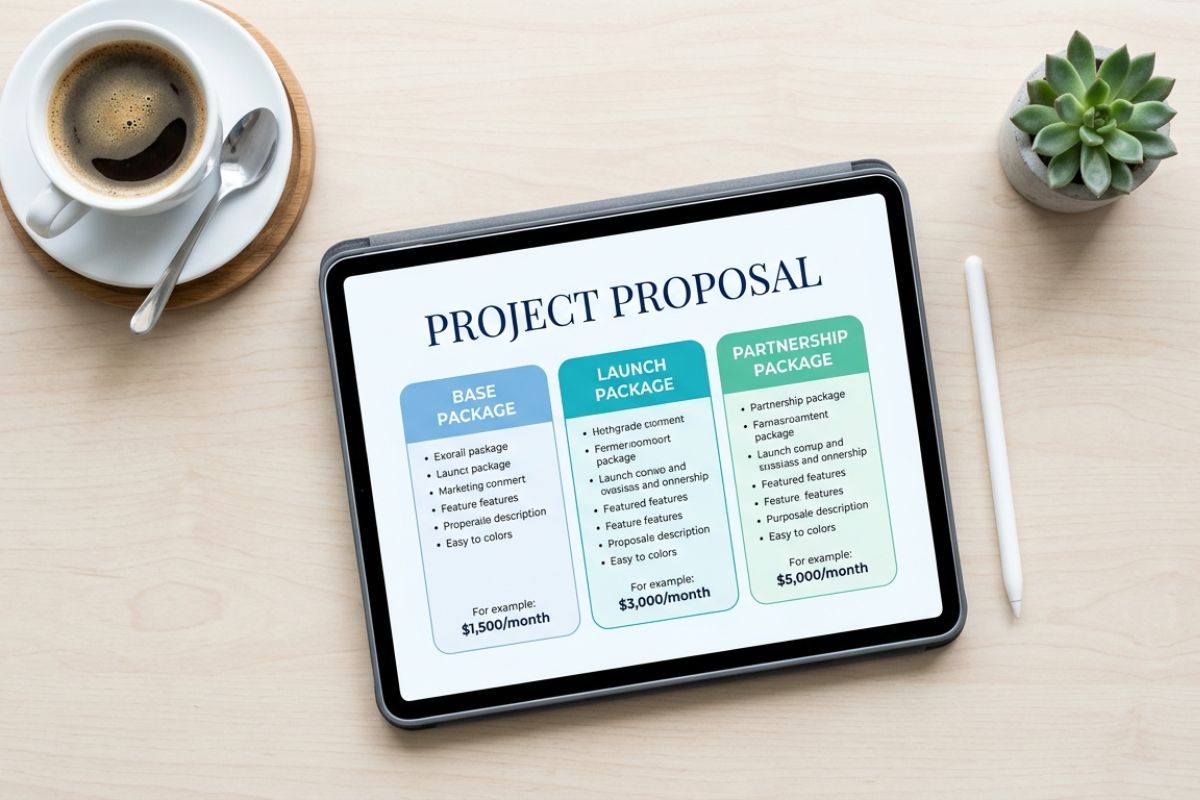
The hourly rate model is the single biggest structural problem with most gig-based freelancing because it puts the client in the position of tracking your time and you in the position of justifying it. I moved to packaged pricing with named tiers: a base campaign package, a launch package, and an extended partnership package. Each tier was defined by scope and deliverables, not by hours.
The one-page proposal format that came with this change covered scope, timeline, what I needed from the client, and payment terms. Nothing else. Clients who were used to getting detailed hourly estimates found this simpler and responded faster. Clients who pushed back on the format were usually not the right fit anyway and the pricing structure made that visible early rather than three weeks into a project.
When you price by the hour you are asking the client to buy your time. When you price by outcome you are asking them to buy a result. High-value clients are only interested in buying one of those two things.
The Pipeline That Runs in One Hour per Week
I spent a long time believing I needed a proper CRM system to manage client relationships professionally. I do not. I use a spreadsheet with five columns: prospect name, current status, next action required, last contact date, and notes. Every Monday I spend 45 minutes going through it.
Three things happen every week without exception. I follow up with one warm lead who has gone quiet. I send a brief note to a past client with something specific and relevant: a location scouting finding, a new piece of their work I noticed, a question about an upcoming project. And I reach out to one new prospect in my niche with something short and direct. That volume of consistent outreach, maintained over months, is what eliminated the feast and famine pattern that defined my gig work period.
Standardizing Delivery So Work Does Not Swallow Everything
The systems I put around delivery are not glamorous but they are the reason I can now work from the road without projects running past their deadlines or into my evenings. A kickoff checklist. A milestone schedule sent to the client at project start. A final delivery folder template that I use for every project regardless of size.
Email templates for the six or seven moments that recur in every client relationship: welcome, feedback request, revision round, final delivery, testimonial request.
These small assets took a few hours to build and now save me several hours per project. More importantly they make the work feel contained rather than open-ended, which is the difference between freelancing feeling like freedom and feeling like a job you cannot clock out of.
Managing Money like the Business It Actually Is
Separate bank accounts. One for business income, one for personal spending, one that holds 28 percent of every payment for tax. I pay myself a fixed amount from the business account each month regardless of what came in that month. That fixed salary is conservative enough that the business account builds a buffer over time and I stop refreshing my banking app every time a payment is due.

I invoice with specific due dates and late payment terms written into every proposal.
Fifty percent upfront on projects above a threshold. These are not aggressive terms. They are standard professional terms and clients who object to them are usually signaling something worth knowing early.
Location Independence Done Properly
The nomadic working life that most freelance content promises and few people describe honestly requires infrastructure before it requires adventure.
Before I based myself anywhere other than home for longer than a week I had already tested the setup: client calls covered, delivery deadlines met, connectivity backup in place.
My first extended remote work stint was two weeks in a mountain town with reliable fiber, a quiet guesthouse, and a morning shooting window before my first call at ten. It worked because the systems were already running. The location did not add complexity because the process was already stable enough to absorb the variable of being somewhere new. That sequence matters. Build the systems first. Then use the freedom they create to go somewhere worth being.
Location independence is not a reward for being brave enough to leave. It is a reward for having built systems stable enough to run from anywhere. The bravery comes second.
Two Numbers That Tell You Everything
Every month I track two figures and nothing else. Pipeline value: the total value of work that is realistically likely to close in the next sixty days. And effective hourly rate: total revenue for the month divided by total hours worked across everything including admin, outreach, and client calls.
If the effective hourly rate is moving up, the pricing and systems are working. If it is moving down, something in the scope, the rates, or the revision process needs adjusting. Those two numbers give me enough information to make one clear decision each month and then get back to the work. That simplicity is what makes full-time freelancing sustainable rather than exhausting.
Are you in the middle of this transition, still in the gig phase, or somewhere on the other side of it?
What was the single change that made the biggest difference for you?
Drop it in the comments below.